World reacts to the trial of the seven Baha'i leaders
GENEVA, 13 January (BWNS) – Iran's decision to begin the trial yesterday of seven Baha'i leaders has triggered a strong international reaction, including a call by Nobel laureate Shirin Ebadi for their immediate release and ultimate acquittal.
"If justice is to be carried out and an impartial judge should investigate the charges leveled against my clients, no other verdict can be reached save that of acquittal," said Mrs. Ebadi, in comments posted on WashingtonTV, a Web-based news service in the United States.
Mrs. Ebadi, who is one of the lawyers for the seven, said she had carefully read the dossier of charges against them and "found in it no cause or evidence to sustain the criminal charges upheld by the prosecutor."
Others also expressed concerns about the fairness of the trial, calling for it to be open and held in accordance with international legal standards. Governments and prominent individuals in the European Union, the United States, Brazil, India, and Canada issued strong statements of concern.
The European Union statement came yesterday, echoing an earlier call for international observers to be allowed in the trial of the seven Baha'is.
"The EU recalls that freedom of thought, conscience and religion is a fundamental and undeniable right which shall be guaranteed in every circumstance," the statement said. "The EU calls for a just, fair and open trial respecting all international standards and obligations. ..."
In Brazil yesterday, Luiz Couto, the president of the Human Rights Commission of the Federal Chamber of Deputies, said in a letter to the Iranian ambassador to Brazil that it appears the "trial is not transparent and public," and that any closed trial would violate the right to a full and fair defense.
"We consider the freedom of religion and belief – that of Muslims, Christians, Jews, Buddhists, Baha'is, and all other religious expressions – a fundamental human right for democracy, both in the east and west," said Congressman Couto.
On Monday, the United States Department of State condemned Iran's decision to move ahead with the trial.
"Authorities have detained these persons for more than 20 months, without making public any evidence against them and giving them little access to legal counsel," said Philip J. Crowley, assistant secretary, Bureau of Public Affairs, U.S. Department of State. "These persons are entitled to due process."
In India, prominent Indians called upon the government to take up the issue of the Baha'i persecution with Tehran. "Our country has a long record of pluralism and tolerance and must speak out," said Maja Daruwala, director of the Commonwealth Human Rights Initiative, according to The Hindu newspaper on Saturday.
In Canada, Foreign Minister Lawrence Cannon issued a statement on Friday expressing deep concern about the ongoing detention of the seven Baha'i leaders. "It is deplorable that these individuals were detained on the sole basis of their faith and have been denied a fair trial," said Mr. Cannon.
Leading human rights barrister Cherie Blair in an interview today with the BBC World Service called for the release of "this group of people who live a religion which preaches peace and did nothing whatsoever to deserve this trial."
In the WashingtonTV interview, Mrs. Ebadi, who is currently outside Iran, also offered a glimpse of what happened yesterday inside Branch 28 of the Revolutionary Court, where the "first session" of the trial was held.
She said only two lawyers of the Defenders of Human Rights Center, which she established, were able to be present in the court. And that in spite of a request for an open hearing, the court was closed.
The charges against the seven were reiterated yesterday in news accounts in government-sponsored news media. They were given as: espionage, "propaganda activities against the Islamic order," the establishment of an illegal administration, cooperation with Israel, the sending of secret documents outside the country, acting against the security of the country, and "corruption on earth."
Diane Ala'i of the Baha'i International Community said the seven have consistently and categorically denied such accusations. "We can be certain that they also did so in front of the judge yesterday," she said.
The seven are Mrs. Fariba Kamalabadi, Mr. Jamaloddin Khanjani, Mr. Afif Naeimi, Mr. Saeid Rezaie, Mrs. Mahvash Sabet, Mr. Behrouz Tavakkoli, and Mr. Vahid Tizfahm.
All but one of the group were arrested on 14 May 2008 at their homes in Tehran. Mrs. Sabet was arrested on 5 March 2008 while in Mashhad. They have been held in Tehran's Evin prison ever since, spending their first year there without formal charges or any access to lawyers.
Prior to their arrest, the seven served as an appointed, ad hoc group known as the "Friends." Their role, carried out with the government's knowledge, was to see to the minimum spiritual and material needs of Iran's Baha'i community, which has been without formal leadership since its elected governing bodies were disbanded in response to a government decree in 1983.
For the Baha’i World News Service home page, go to:
http://news.bahai.org
Wednesday, January 13, 2010

Tuesday, January 12, 2010
Trial of seven Baha’i leaders under way in Tehran
12 January 2010GENEVA — The trial of seven imprisoned Baha'i leaders began today in Iran. Initial reports indicate that the trial is marked by numerous violations of legal due process.
"We understand that no observers were allowed in the court," said Diane Ala'i, the Baha'i International Community's representative to the United Nations in Geneva. "We find this completely outrageous, given that these seven have been held purely because of their religious beliefs, in total contradiction to any human rights standards.
"We understand that even the lawyers had to argue their way inside the court – lawyers who in any case had virtually no access to the accused for nearly two years.
"At the same time, the prisoners' interrogators from the Ministry of Intelligence and a film crew were seen going in, raising questions about the nature of the trial," she said.
Ms. Ala'i also noted that an Iranian Web site linked to state-run television posted a story Monday evening announcing that the trial had already begun and listing the same baseless accusations made in the past against the seven.
"In any event, all of these accounts point to a trial that is highly irregular, very similar to the show trials that have been held in Iran in recent months," she said.
The seven are Mrs. Fariba Kamalabadi, Mr. Jamaloddin Khanjani, Mr. Afif Naeimi, Mr. Saeid Rezaie, Mrs. Mahvash Sabet, Mr. Behrouz Tavakkoli, and Mr. Vahid Tizfahm.
All but one of the group were arrested on 14 May 2008 at their homes in Tehran. Mrs. Sabet was arrested on 5 March 2008 while in Mashhad. They have been held in Tehran's Evin prison ever since, spending their first year there without formal charges or any access to lawyers.
"Whatever happens, it is clear that the trial of these seven innocent people represents the trial of an entire religious community, and is an attempt to further intimidate and ostracize all Iranian Baha'is simply because they hold a different religious viewpoint from those in power."
Saturday, January 09, 2010
show details 3:26 PM (1 hour ago) |
Baha'i International Community rejects allegations that arrested Baha'is had weapons in homes
GENEVA, 9 January (BWNS) – The Baha'i International Community today categorically rejected new allegations by the Iranian government that arms and ammunition were found in the homes of Baha'is who were arrested in Tehran last Sunday.
"This is nothing less than a blatant lie," said Diane Ala'i, the Baha'i International Community's representative to the United Nations in Geneva. "Baha'is are by the most basic principles of their faith committed to absolute nonviolence, and any charge that there might have been weapons or 'live rounds' in their homes is simply and completely unbelievable.
"Without doubt, these are baseless fabrications devised by the government to further create an atmosphere of prejudice and hatred against the Iranian Baha'i community. For more than a century Baha'is have suffered all manner of persecution in Iran and have not resorted to armed violence, and everyone knows this. Unfortunately, the Iranian government is once again resorting to outright falsehoods to justify its nefarious intentions against the Baha'i community. It should know that these lies will have no credibility whatsoever.
"We are particularly concerned by the fact that these accusations come just days before the scheduled trial of seven Baha'i leaders, who have been locked up for nearly two years on equally unfounded charges," she said.
"All of these latest accusations are so far-fetched as to be ludicrous if they were not so obviously aimed at putting innocent lives at risk," she said. "As we have said before, rather than accepting responsibility for the turmoil in the country, the Iranian government seeks to lay the blame on others, including foreign powers, international organizations and media outlets, students, women, and terrorists."
On Friday, several news agencies reported that Tehran's general prosecutor, Abbas Jafari Dolatabadi, said the Baha'is who were arrested on Sunday "were arrested because they played a role in organizing the Ashura protests and namely for having sent abroad pictures of the unrest."
"They were not arrested because they are Baha'is," said Mr. Dolatabadi, according to Agence France Presse. "Arms and ammunition were seized in the homes of some of them."
Ms. Ala'i also rejected Mr. Dolatabadi's assertions that Baha'is were involved in the planning of the Ashura demonstrations, or in any violent or subversive activity related to the recent turmoil in Iran.
"For the past 30 years, Iranian Baha'is have been subjected to the worst forms of persecution, ranging from arbitrary execution to the exclusion of their children from school," said Ms. Ala'i. "Yet they have responded only through means that are peaceful and legal."
Seven Baha'is leaders are scheduled to go on trial on Tuesday on trumped-up charges of espionage, "insulting religious sanctities," and "propaganda" against the government. They have been held in Evin prison since mid-2008. The seven are Mrs. Fariba Kamalabadi, Mr. Jamaloddin Khanjani, Mr. Afif Naeimi, Mr. Saeid Rezaie, Mrs. Mahvash Sabet, Mr. Behrouz Tavakkoli, and Mr. Vahid Tizfahm.
On Sunday, 13 Baha'is were arrested in early morning raids on their homes in Tehran. Three have been released but 10 remain detained at Evin prison.
They are: Leva Khanjani, granddaughter of Jamaloddin Khanjani, and her husband, Babak Mobasher; Jinous Sobhani, former secretary of Mrs. Shirin Ebadi, and her husband Artin Ghazanfari; Mehran Rowhani and Farid Rowhani, who are brothers; Payam Fanaian; Nikav Hoveydaie; and Ebrahim Shadmehr and his son, Zavosh Shadmehr.
For the Baha’i World News Service home page, go to:
http://news.bahai.org
GENEVA, 9 January (BWNS) – The Baha'i International Community today categorically rejected new allegations by the Iranian government that arms and ammunition were found in the homes of Baha'is who were arrested in Tehran last Sunday.
"This is nothing less than a blatant lie," said Diane Ala'i, the Baha'i International Community's representative to the United Nations in Geneva. "Baha'is are by the most basic principles of their faith committed to absolute nonviolence, and any charge that there might have been weapons or 'live rounds' in their homes is simply and completely unbelievable.
"Without doubt, these are baseless fabrications devised by the government to further create an atmosphere of prejudice and hatred against the Iranian Baha'i community. For more than a century Baha'is have suffered all manner of persecution in Iran and have not resorted to armed violence, and everyone knows this. Unfortunately, the Iranian government is once again resorting to outright falsehoods to justify its nefarious intentions against the Baha'i community. It should know that these lies will have no credibility whatsoever.
"We are particularly concerned by the fact that these accusations come just days before the scheduled trial of seven Baha'i leaders, who have been locked up for nearly two years on equally unfounded charges," she said.
"All of these latest accusations are so far-fetched as to be ludicrous if they were not so obviously aimed at putting innocent lives at risk," she said. "As we have said before, rather than accepting responsibility for the turmoil in the country, the Iranian government seeks to lay the blame on others, including foreign powers, international organizations and media outlets, students, women, and terrorists."
On Friday, several news agencies reported that Tehran's general prosecutor, Abbas Jafari Dolatabadi, said the Baha'is who were arrested on Sunday "were arrested because they played a role in organizing the Ashura protests and namely for having sent abroad pictures of the unrest."
"They were not arrested because they are Baha'is," said Mr. Dolatabadi, according to Agence France Presse. "Arms and ammunition were seized in the homes of some of them."
Ms. Ala'i also rejected Mr. Dolatabadi's assertions that Baha'is were involved in the planning of the Ashura demonstrations, or in any violent or subversive activity related to the recent turmoil in Iran.
"For the past 30 years, Iranian Baha'is have been subjected to the worst forms of persecution, ranging from arbitrary execution to the exclusion of their children from school," said Ms. Ala'i. "Yet they have responded only through means that are peaceful and legal."
Seven Baha'is leaders are scheduled to go on trial on Tuesday on trumped-up charges of espionage, "insulting religious sanctities," and "propaganda" against the government. They have been held in Evin prison since mid-2008. The seven are Mrs. Fariba Kamalabadi, Mr. Jamaloddin Khanjani, Mr. Afif Naeimi, Mr. Saeid Rezaie, Mrs. Mahvash Sabet, Mr. Behrouz Tavakkoli, and Mr. Vahid Tizfahm.
On Sunday, 13 Baha'is were arrested in early morning raids on their homes in Tehran. Three have been released but 10 remain detained at Evin prison.
They are: Leva Khanjani, granddaughter of Jamaloddin Khanjani, and her husband, Babak Mobasher; Jinous Sobhani, former secretary of Mrs. Shirin Ebadi, and her husband Artin Ghazanfari; Mehran Rowhani and Farid Rowhani, who are brothers; Payam Fanaian; Nikav Hoveydaie; and Ebrahim Shadmehr and his son, Zavosh Shadmehr.
For the Baha’i World News Service home page, go to:
http://news.bahai.org
Iran Press Watch: The Baha'i Community |

| Citizens speak up for Baha’is in Iran Posted: 08 Jan 2010 04:12 AM PST (DNA) Just five days before the trial of seven former leaders of the Baha’is in Iran, prominent citizens have expressed concern at the continued persecution of the community and urged the government of India to speak out. Maja Daruwala, director, Commonwealth Human Rights Initiative, said, “This trial is designed to harass and intimidate and is one more in a line of persecution of this community. Our country has a record of pluralism and tolerance and must speak out.” According to lawyer Zia Mody, senior partner in AZB & Partners, “The campaign in the Iranian media wrongly accusing the Baha’is of being behind the recent civil unrest in Iran on the holy day of Ashura is extremely worrying, given its timing. This is unhappily evident from the articles being published right now by Iran’s most widely read paper.” Read Full Story on DNA |
Tuesday, January 05, 2010
Trial of seven Baha'i leaders in Iran looms
GENEVA, 5 January (BWNS) – Recent developments in Iran have raised grave concern about the ultimate fate of the seven Baha'i leaders who are scheduled to go on trial next Tuesday.
"The Baha'i community in Iran has all too often been subjected to campaigns of vilification and false charges devised to deflect the attention of a disquieted population onto the Baha'is and away from those in power," said Diane Ala'i, the Baha'i International Community representative to the United Nations in Geneva. "And now, in these days leading to the trial, there are signs that once again the Baha'is are being made scapegoats.
"Rather than accepting responsibility for the turmoil in the country, the Iranian government seeks to lay the blame on others, including foreign powers, international organizations and media outlets, students, women, and terrorists. Now the Baha'is have been added to this long list of alleged culprits," she said.
"Over the past several days, Iranian state-sponsored media have accused the Baha'is of being responsible for the unrest surrounding the holy day of Ashura," said Ms. Ala'i. "This is clearly aimed at rousing public sentiment against the seven Baha'is being held in Evin prison. We are particularly concerned that the government, or ultraconservative elements within it, may use the turmoil in Iran as cover for extreme measures against these wrongly imprisoned individuals.
This concern deepened on Sunday, she said, when authorities rounded up 13 Baha'is from their homes in Tehran, took them to a detention center, and tried to get them to sign a document saying that they would not engage in any future demonstrations.
"Putting two and two together, the situation facing these Baha'i leaders is extremely ominous. We are deeply concerned for their safety.
"We expect their trial to be nothing but a show trial, with a predetermined outcome," she said.
"Should anything happen to any of these seven Baha'is before or after the trial, the Iranian government must be held responsible," said Ms. Ala'i. "We ask that the international community indicate clearly to Iran that it will be watching and that it expects any trial to be public and held in accordance with internationally recognized principles of due process."
The seven are Mrs. Fariba Kamalabadi, Mr. Jamaloddin Khanjani, Mr. Afif Naeimi, Mr. Saeid Rezaie, Mrs. Mahvash Sabet, Mr. Behrouz Tavakkoli, and Mr. Vahid Tizfahm. They were arrested in the spring of 2008 and have been held in Evin prison ever since.
Official Iranian news accounts have said the seven are to be accused of "espionage for Israel, insulting religious sanctities, and propaganda against the Islamic republic." All of the charges are utterly baseless, said Ms. Ala'i.
Trial dates were previously announced for July, August, and October but were postponed each time. In December, lawyers were notified that 12 January had been set as a new date.
Ms. Ala'i noted that persecution of Baha'is in Iran had intensified steadily throughout 2009. Currently, some 48 Baha'is are imprisoned, and many others across the country have been subjected to home searches, confiscation of personal property, and revolving-door arrests. Since last March, some 60 Baha'is have been arrested and imprisoned for periods ranging from overnight to several months.
An anti-Baha'i campaign in the news media campaign has also continued, she said, culminating in the absurd accusations last week that Baha'is were involved in provoking the recent civil unrest on the Ashura holy day on 27 December.
The semiofficial Fars News Agency, for example, reported the next day that Ne'mattollah Bavand, described as an "expert" in political affairs, said "Bahaism under the leadership of Zionism is behind the latest crisis and unrest."
Ms. Ala'i said these statements have raised concern among the Baha'is that there may be a coordinated effort to introduce these false accusations at the upcoming trial.
Among the 13 arrested on 3 January were relatives of two of the imprisoned leaders, including Negar Sabet, daughter of Mahvash Sabet; Leva Khanjani, granddaughter of Jamaloddin Khanjani; and her husband, Babak Mobasher. Others arrested were Jinous Sobhani, former secretary of Mrs. Shirin Ebadi, and her husband Artin Ghazanfari; Mehran Rowhani and Farid Rowhani, who are brothers; Nasim Beiglari; Payam Fanaian; Nikav Hoveydaie and his wife, Mona Misaghi; and Ebrahim Shadmehr and his son, Zavosh Shadmehr.
To read the article with the photograph, go to:
http://news.bahai.org/story/
For the Baha’i World News Service home page, go to:
GENEVA, 5 January (BWNS) – Recent developments in Iran have raised grave concern about the ultimate fate of the seven Baha'i leaders who are scheduled to go on trial next Tuesday.
"The Baha'i community in Iran has all too often been subjected to campaigns of vilification and false charges devised to deflect the attention of a disquieted population onto the Baha'is and away from those in power," said Diane Ala'i, the Baha'i International Community representative to the United Nations in Geneva. "And now, in these days leading to the trial, there are signs that once again the Baha'is are being made scapegoats.
"Rather than accepting responsibility for the turmoil in the country, the Iranian government seeks to lay the blame on others, including foreign powers, international organizations and media outlets, students, women, and terrorists. Now the Baha'is have been added to this long list of alleged culprits," she said.
"Over the past several days, Iranian state-sponsored media have accused the Baha'is of being responsible for the unrest surrounding the holy day of Ashura," said Ms. Ala'i. "This is clearly aimed at rousing public sentiment against the seven Baha'is being held in Evin prison. We are particularly concerned that the government, or ultraconservative elements within it, may use the turmoil in Iran as cover for extreme measures against these wrongly imprisoned individuals.
This concern deepened on Sunday, she said, when authorities rounded up 13 Baha'is from their homes in Tehran, took them to a detention center, and tried to get them to sign a document saying that they would not engage in any future demonstrations.
"Putting two and two together, the situation facing these Baha'i leaders is extremely ominous. We are deeply concerned for their safety.
"We expect their trial to be nothing but a show trial, with a predetermined outcome," she said.
"Should anything happen to any of these seven Baha'is before or after the trial, the Iranian government must be held responsible," said Ms. Ala'i. "We ask that the international community indicate clearly to Iran that it will be watching and that it expects any trial to be public and held in accordance with internationally recognized principles of due process."
The seven are Mrs. Fariba Kamalabadi, Mr. Jamaloddin Khanjani, Mr. Afif Naeimi, Mr. Saeid Rezaie, Mrs. Mahvash Sabet, Mr. Behrouz Tavakkoli, and Mr. Vahid Tizfahm. They were arrested in the spring of 2008 and have been held in Evin prison ever since.
Official Iranian news accounts have said the seven are to be accused of "espionage for Israel, insulting religious sanctities, and propaganda against the Islamic republic." All of the charges are utterly baseless, said Ms. Ala'i.
Trial dates were previously announced for July, August, and October but were postponed each time. In December, lawyers were notified that 12 January had been set as a new date.
Ms. Ala'i noted that persecution of Baha'is in Iran had intensified steadily throughout 2009. Currently, some 48 Baha'is are imprisoned, and many others across the country have been subjected to home searches, confiscation of personal property, and revolving-door arrests. Since last March, some 60 Baha'is have been arrested and imprisoned for periods ranging from overnight to several months.
An anti-Baha'i campaign in the news media campaign has also continued, she said, culminating in the absurd accusations last week that Baha'is were involved in provoking the recent civil unrest on the Ashura holy day on 27 December.
The semiofficial Fars News Agency, for example, reported the next day that Ne'mattollah Bavand, described as an "expert" in political affairs, said "Bahaism under the leadership of Zionism is behind the latest crisis and unrest."
Ms. Ala'i said these statements have raised concern among the Baha'is that there may be a coordinated effort to introduce these false accusations at the upcoming trial.
Among the 13 arrested on 3 January were relatives of two of the imprisoned leaders, including Negar Sabet, daughter of Mahvash Sabet; Leva Khanjani, granddaughter of Jamaloddin Khanjani; and her husband, Babak Mobasher. Others arrested were Jinous Sobhani, former secretary of Mrs. Shirin Ebadi, and her husband Artin Ghazanfari; Mehran Rowhani and Farid Rowhani, who are brothers; Nasim Beiglari; Payam Fanaian; Nikav Hoveydaie and his wife, Mona Misaghi; and Ebrahim Shadmehr and his son, Zavosh Shadmehr.
To read the article with the photograph, go to:
http://news.bahai.org/story/
For the Baha’i World News Service home page, go to:
Wednesday, December 30, 2009
Prayer for the
Persecuted Bahá’ís in Írán
O God, my God! Thou seest Thy loved ones turning their hearts to Thee, and holding fast onto the cord of Thy ordinances and laws. I beseech thee by the waves of the sea of Thine utterance, and by Him through whom Thou didst adorn the heavens of Thy might, to graciously protect them by the aid of Thy hosts.
O God! Thou beholdest Thy lovers in Írán in the clutches of hate and enmity. I beg of Thee, by Thy mercy which hath preceded the contingent world, to raise up from the earth those who will be moved to aid and protect them, and to preserve their rights and the restitution due to them by those who broke Thy Covenant and Testament, and perpetrated such acts as made the inmates of the cities of Thy justice and equity to lament. Thou art, verily, the All-Powerful, the All-Knowing, the All- Wise.
– Bahá’u’lláh
(Fire and Light, p. 13)
I have learned silence from the talkative,
toleration from the intolerant,
and kindness from the unkind;
yet, strange, I am ungrateful to those teachers.
Kahlil Gibran
Persecuted Bahá’ís in Írán
O God, my God! Thou seest Thy loved ones turning their hearts to Thee, and holding fast onto the cord of Thy ordinances and laws. I beseech thee by the waves of the sea of Thine utterance, and by Him through whom Thou didst adorn the heavens of Thy might, to graciously protect them by the aid of Thy hosts.
O God! Thou beholdest Thy lovers in Írán in the clutches of hate and enmity. I beg of Thee, by Thy mercy which hath preceded the contingent world, to raise up from the earth those who will be moved to aid and protect them, and to preserve their rights and the restitution due to them by those who broke Thy Covenant and Testament, and perpetrated such acts as made the inmates of the cities of Thy justice and equity to lament. Thou art, verily, the All-Powerful, the All-Knowing, the All- Wise.
– Bahá’u’lláh
(Fire and Light, p. 13)
I have learned silence from the talkative,
toleration from the intolerant,
and kindness from the unkind;
yet, strange, I am ungrateful to those teachers.
Kahlil Gibran
Saturday, November 28, 2009
Abuses in Iran
Journalist Held without Charge in Notorious Tehran Prison
By Ulrike Putz and Mathieu von RohrFariba Pajooh has been held in Tehran's notorious Evin Prison since she was arrested in August, with no access to an attorney. No charges have been filed against the Iranian journalist.

When she received the call from the intelligence service, Fariba Pajooh knew that it didn't bode well for her. We want to talk to you, they told her. It was supposedly just an informational meeting.
The men came to pick her up a few days later, on Aug. 22, the first day of Ramadan. Pajooh had spent the entire day at home with her mother, preparing the evening meal. She only left the house for a short time to buy some sweets. When she returned, she was being accompanied by three men.
The men were polite, says the mother. They spent an hour searching drawers and cupboards and checking the computer. They allowed the mother and daughter to break the fast together. Trembling with fear, the pair ate dates and drank tea. Then the men said that Pajooh had to come with them, but only for an hour. They promised the mother that they would treat her as if she were their own daughter. But they were lying.Harsh Crackdown
Since that day in August, Pajooh, 29, a petite woman with an attractive, girlish face, has been incarcerated in Tehran's notorious Evin Prison, in section 209, which is controlled by the intelligence service. She is one of more than 100 journalists and bloggers the regime ordered arrested in the wake of the widespread protests against the fraudulent elections that brought President Mahmoud Ahmadinejad back into power. But few have been locked up for as long as Pajooh, whose case makes it abundantly clear just how harshly the regime is cracking down on journalists.
In prison, Pajooh is suffering from severe depression and stress-related cardiac arrhythmia. Her parents were not permitted to see her during the first month of her incarceration. Now they are allowed to visit on Mondays, although they are often turned away. Pajooh's current attorney has not been given access to her at all. It was only after Pajooh had been imprisoned for two months that the lawyer even learned of the charges being leveled against her client: initially espionage, followed by "propaganda against the regime."
Pajooh is part of the generation of Iranians who have been striving for freedom since their youth. She was arrested for the first time at 18. She became a journalist, writing for reform-oriented publications, government news agencies and newspapers -- not about politics, but about Iran's social problems.
She was detained a second time in 2008, when she sought to travel to the United States for the presidential election there. When this year's protests against the Iranian regime rocked the country, Pajooh worked around the clock. She also worked as a translator for a Colombian correspondent, which made her even more suspicious to the authorities. She knew that she was in danger, she told friends, but insisted that she only wanted a better future for Iran.
"The pen is the enemy of ignorance," she wrote in her blog, a few days before she was arrested. "My pen is the friendliest of the friendly. I have conspired with my pen."
Demoralizing Conditions
Pajooh spent the first month of her captivity in a "grave," the word Iran's prisoners use to describe the tiny underground cells at Evin Prison, which is almost a city unto itself, hidden behind high walls on a hill above Tehran. She was not kept in any of the wards controlled by the Basij militias, from which reports of torture and rape have reached the outside world. But the loneliness of solitary confinement is demoralizing. Several times a day, the prisoners are taken to interrogations, where they are beaten and subjected to body searches.
After a while, prisoners learn to distinguish among their interrogators, identifying them by their shoes, which they can see despite being blindfolded, and by how aggressive they are. The interrogators berate, threaten and beat the prisoners, and then they try to entice them with the promise of freedom if they agree to confess.
After a month, Pajooh was moved to the above-ground section of the prison, where she shared a cell with another journalist, Hengameh Shahidi. The two women staged a hunger strike at the end of October and were taken to the infirmary after five days. Shahidi was released, but Pajooh was moved to a new cell.
The cell where she is now kept together with a handful of other prisoners is only about 10 square meters (around 100 square feet), with a tiny porthole providing daylight. The temperature drops to freezing at night. Pajooh needs to take eight pills every day: three for her heart, three antidepressants and two sleeping pills.
Empty Promises
Farideh Pajooh, the mother, says that Fariba is still being interrogated daily, sometimes until 11 in the evening. As young as she is, says the mother, her daughter already has a lot of white hairs. Her mental state is very worrying, the mother says.
The mother has spent the last three months going from one government office to the next, where she has heard many empty promises. Human rights organizations have become involved, but nothing has happened. The hearing of evidence was supposedly completed days ago, but a trial date has yet to be set.
Last week, the desperate family staged an eight-hour sit-down strike at the Revolutionary Court. When they were finally allowed to speak with Tehran's chief prosecutor, Abbas Jafari Dolatabadi, he told them that he would look into the matter. Another promise.
Translated from the German by Christopher Sultan
Friday, November 20, 2009
UN resolution on Iran sends powerful message on human rights
UNITED NATIONS – The approval today of a strongly worded resolution on human rights in Iran sends a powerful signal to the Iranian government that the world is gravely concerned about how Iran treats its citizens, said the Baha'i International Community.
The resolution, approved by a vote of 74 to 48 by the Third Committee of the UN General Assembly, expressed "deep concern at serious ongoing and recurring human rights violations in the Islamic Republic of Iran." The list of violations included oppressive measures taken after the June presidential election and "increasing discrimination" against minority groups, including Baha'is.
"This year's resolution – which is among the most forcefully worded in more than 25 years of resolutions on Iran – sends a potent message to the government there, stating vigorously that the international community will not turn a blind eye to human rights violations," said Bani Dugal, the principal representative of the Baha'i International Community to the United Nations.
"The General Assembly identifies numerous violations, including the use of torture, the repeated abuse of legal rights, the violent repression of women, and the ongoing discrimination against minorities, including Baha'is, who are Iran's largest religious minority and are persecuted solely because of their religious belief," she said.
The resolution also expresses concern over the treatment of "Arabs, Azeris, Baluchis, Kurds, Christians, Jews, Sufis and Sunni Muslims and their defenders."
"The resolution also sharply condemns Iran's severe curbs on freedom of expression and its use of violence to silence dissent after the presidential election in June," said Ms. Dugal. "We can only hope that, given the severity of the resolution's expression, Iran will at long last heed the international community's recommendations and change its ways."
The resolution, which was put forward by Canada and cosponsored by 42 other countries, calls on Iran to better cooperate with UN human rights monitors, such as by allowing them to make visits to Iran, and asks the UN secretary general to report back next year on Iran's progress at fulfilling its human rights obligations.
Noting the turmoil that followed the presidential elections, the resolution devoted eight paragraphs to express "particular concern" about oppressive measures used by the government to suppress dissent. It noted specifically the persecution of journalists, human rights defenders, students and "others exercising their rights to peaceful assembly and association."
It also noted the "use of violence" against "Iranian citizens engaged in the peaceful exercise of freedom of association, also resulting in numerous deaths and injuries." And it criticized the holding of "mass trials and denying defendants access to adequate legal representation."
It makes extensive mention of the persecution of Baha'is, expressing concern over "attacks on Baha'is and their faith in State-sponsored media, increasing evidence of efforts by the State to identify, monitor and arbitrarily detain Baha'is, preventing members of the Baha'i Faith from attending university and from sustaining themselves economically."
The resolution also notes the continued detention of seven Baha'i leaders who were arrested in March and May 2008, stating they have faced "serious charges without adequate or timely access to legal representation."
For the Baha’i World News Service home page, go to:
http://news.bahai.org
______________________________
Copyright 2009 by the Baha'i World News Service. All stories and photographs produced by the Baha'i World News Service may be freely reprinted, re-emailed, re-posted to the World Wide Web and otherwise reproduced by any individual or organization as long as they are attributed to the Baha'i World News Service. For more information, go to http://news.bahai.org/terms-
UNITED NATIONS – The approval today of a strongly worded resolution on human rights in Iran sends a powerful signal to the Iranian government that the world is gravely concerned about how Iran treats its citizens, said the Baha'i International Community.
The resolution, approved by a vote of 74 to 48 by the Third Committee of the UN General Assembly, expressed "deep concern at serious ongoing and recurring human rights violations in the Islamic Republic of Iran." The list of violations included oppressive measures taken after the June presidential election and "increasing discrimination" against minority groups, including Baha'is.
"This year's resolution – which is among the most forcefully worded in more than 25 years of resolutions on Iran – sends a potent message to the government there, stating vigorously that the international community will not turn a blind eye to human rights violations," said Bani Dugal, the principal representative of the Baha'i International Community to the United Nations.
"The General Assembly identifies numerous violations, including the use of torture, the repeated abuse of legal rights, the violent repression of women, and the ongoing discrimination against minorities, including Baha'is, who are Iran's largest religious minority and are persecuted solely because of their religious belief," she said.
The resolution also expresses concern over the treatment of "Arabs, Azeris, Baluchis, Kurds, Christians, Jews, Sufis and Sunni Muslims and their defenders."
"The resolution also sharply condemns Iran's severe curbs on freedom of expression and its use of violence to silence dissent after the presidential election in June," said Ms. Dugal. "We can only hope that, given the severity of the resolution's expression, Iran will at long last heed the international community's recommendations and change its ways."
The resolution, which was put forward by Canada and cosponsored by 42 other countries, calls on Iran to better cooperate with UN human rights monitors, such as by allowing them to make visits to Iran, and asks the UN secretary general to report back next year on Iran's progress at fulfilling its human rights obligations.
Noting the turmoil that followed the presidential elections, the resolution devoted eight paragraphs to express "particular concern" about oppressive measures used by the government to suppress dissent. It noted specifically the persecution of journalists, human rights defenders, students and "others exercising their rights to peaceful assembly and association."
It also noted the "use of violence" against "Iranian citizens engaged in the peaceful exercise of freedom of association, also resulting in numerous deaths and injuries." And it criticized the holding of "mass trials and denying defendants access to adequate legal representation."
It makes extensive mention of the persecution of Baha'is, expressing concern over "attacks on Baha'is and their faith in State-sponsored media, increasing evidence of efforts by the State to identify, monitor and arbitrarily detain Baha'is, preventing members of the Baha'i Faith from attending university and from sustaining themselves economically."
The resolution also notes the continued detention of seven Baha'i leaders who were arrested in March and May 2008, stating they have faced "serious charges without adequate or timely access to legal representation."
For the Baha’i World News Service home page, go to:
http://news.bahai.org
______________________________
Copyright 2009 by the Baha'i World News Service. All stories and photographs produced by the Baha'i World News Service may be freely reprinted, re-emailed, re-posted to the World Wide Web and otherwise reproduced by any individual or organization as long as they are attributed to the Baha'i World News Service. For more information, go to http://news.bahai.org/terms-
Thursday, November 05, 2009
- Theft at the Baha’i cemetery in Sangsar
- November 4th, 2009
- According to HRANA [Human Rights Activists News Agency], based on reports from the Baha’i Committee of Human Rights Activists in Iran, unidentified persons took one of the two large water tanks at the Baha’i cemetery in the city of Sangsar (near Semnan) in the past few days.
This type of water tank is very large and holds a considerable volume of water. Moving it without proper equipment and a crane is impossible. It is noteworthy that the road leading to this cemetery has been closed by the Municipality of Sangsar for a while now, and access has been restricted to Municipality personnel only.
[Source: http://hra-news.info/news/8275.aspx; Translated by Iran Press Watch]
Comments (3) - Court order for the arrest and imprisonment of a Baha’i woman in Semnan
- November 4th, 2009
- According to HRANA [Human Rights Activists News Agency], based on reports from the Baha’i Committee of Human Rights Activists in Iran, Mrs. Manizheh Manzavian, a Baha’i in Semnan, who was arrested and detained during the month of Khordad of the current year [May-Jun 2009] and subsequently released on bail [see http://www.iranpresswatch.org/post/4091], has been sentenced to three years and six months of imprisonment by the [Islamic] Revolutionary Court of the city of Semnan, presided over by Judge Zangui.
The charges brought against Mrs. Manizheh Manzavian, as stated, include activities against [National] security by teaching the Baha’i Faith, as well as membership in an organization opposing the Islamic regime and related to the Baha’is. It is important to note that Mrs. Manizheh Manzavian was previously a member of the informal administrative committee of the Baha’is of Semnan which, in the last month of Esfand [Feb-Mar 2009], was shut down by order of the Prosecutor of the Islamic Revolutionary Court, after which she had had no further activities [in the Baha’i administration].
[Source: http://hra-news.info/news/8276.aspx; Translated by Iran Press Watch]
Wednesday, November 04, 2009
Iran Press Watch: The Baha'i Community
Kidnapping and Torture of a Baha’i in Shiraz
Posted: 03 Nov 2009 08:33 AM PST
A Baha’i has been kidnapped, persecuted, and tortured by unknown individuals in Shiraz.
According to HRANA [Human Rights Activists News Agency], based on reports from the Baha’i Committee of Human Rights Activists in Iran, Mr. Rouh’u’llah Rezaie, a 45-year-old Baha’i in Shiraz, was stopped, kidnapped, and moved to an unknown place as he was returning home, to his wife and child, from a gas station early in the morning on 8/8/1388 [October 27,2009]. There, he was threatened, insulted, and subjected to a simulated hanging in a show-execution. He was left naked in extreme cold, and different parts of his hands, chest, and forehead were burnt by cigarettes. Finally, he was released on a road in the suburbs of Shiraz.
It should be noted that Mr. Rezaie was imprisoned for five years in 1360 [1971], when he was 18, in Adel Abad prison in Shiraz. He has endured the most terrible conditions and all possible physical and psychological pressure due to his religious beliefs.
[Source: http://hra-news.info/news/8174.aspx; Translated by Iran Press W
Kidnapping and Torture of a Baha’i in Shiraz
Posted: 03 Nov 2009 08:33 AM PST
A Baha’i has been kidnapped, persecuted, and tortured by unknown individuals in Shiraz.
According to HRANA [Human Rights Activists News Agency], based on reports from the Baha’i Committee of Human Rights Activists in Iran, Mr. Rouh’u’llah Rezaie, a 45-year-old Baha’i in Shiraz, was stopped, kidnapped, and moved to an unknown place as he was returning home, to his wife and child, from a gas station early in the morning on 8/8/1388 [October 27,2009]. There, he was threatened, insulted, and subjected to a simulated hanging in a show-execution. He was left naked in extreme cold, and different parts of his hands, chest, and forehead were burnt by cigarettes. Finally, he was released on a road in the suburbs of Shiraz.
It should be noted that Mr. Rezaie was imprisoned for five years in 1360 [1971], when he was 18, in Adel Abad prison in Shiraz. He has endured the most terrible conditions and all possible physical and psychological pressure due to his religious beliefs.
[Source: http://hra-news.info/news/8174.aspx; Translated by Iran Press W
Thursday, October 01, 2009
Prominent Iranians call for religious liberty
WASHINGTON, 30 September (BWNS) – A best-selling author and an Oscar-nominated actress are among those who have called for religious freedom in Iran, including an end to the persecution of Baha'is in that country.
Some 1,400 people heard Azar Nafisi, author of "Reading Lolita in Tehran," and Shohreh Aghdashloo, Academy Award-nominated actress for "House of Sand and Fog," speak at a public gathering this month at George Washington University's Lisner Auditorium. Both Dr. Nafisi and Ms. Aghdashloo were born in Iran, and neither is a member of the Baha'i community.
Dr. Nafisi spoke passionately about the common humanity of all people and the suffering of one being the suffering of all. She particularly focused on minorities in Iran and pointed to the example of the Baha'is.
"I ask myself," she said, "how does it feel to be deprived of every single basic human right in a country you call your own, in a country where you have been born into the language and the culture, a country where your parents and your parents' parents ... have lived and contributed to, what does it mean to be deprived of the right to education, of the right to property, of even the right to life?"
She said the struggle is "not a political struggle, it is an existential one." It goes beyond the Baha'is, she said, to "every single person in Iran who dares to be different, who dares to express his or her desire for the freedom to have a choice."
"Baha'is in Iran have become the canaries in the mine," she said. "You want to know how much freedom the Iranian people enjoy today, you go to the fate of its Baha'is."
Depriving people of their individuality is a way of killing them, she said. "It is worse, in fact, that just being plainly murdered. To deny your humanity, your individuality, is to be dead."
"The show trials that have been going on in Iran – all these people coming from such different backgrounds, such different ages, such different political and religious beliefs, all of them deprived of their individuality," she said.
The defendants, she said, were forced into confessing that "whatever they believed in, whatever lifestyle they led ... was a farce and sham. That is another way of killing people."
Ms. Aghdashloo, addressing the gathering via video from Los Angeles, said everything she had "ever read or understood about the Baha'i Faith" is that is stands for the oneness of humanity and inherent nobility of all human beings.
"I stand with many others around the world in conveying our unified voice in support of the Baha'is in Iran and wish to speak out against the ongoing and deplorable actions of the Iranian government," she said.
The event in Washington, held on 12 September, was dedicated to the Baha'is who are jailed in Iran, including the seven "leaders" who have been detained in Tehran's notorious Evin prison for more than a year on trumped-up charges of "espionage for Israel, insulting religious sanctities, and propaganda against the Islamic republic."
It was one of a number of gatherings held in recent months across the United States to offer prayers for the prisoners, including events in Los Angeles, San Francisco, and now Washington. ...
To read the rest of the article, see accompanying photographs, and find video links for the speeches, go to:
http://news.bahai.org/story/731
For the Baha’i World News Service home page, go to:
http://news.bahai.org
________________________________________________
Copyright 2009 by the Baha'i World News Service. All stories and photographs produced by the Baha'i World News Service may be freely reprinted, re-emailed, re-posted to the World Wide Web and otherwise reproduced by any individual or organization as long as they are attributed to the Baha'i World News Service. For more information, go to http://news.bahai.org/terms-of-use/
WASHINGTON, 30 September (BWNS) – A best-selling author and an Oscar-nominated actress are among those who have called for religious freedom in Iran, including an end to the persecution of Baha'is in that country.
Some 1,400 people heard Azar Nafisi, author of "Reading Lolita in Tehran," and Shohreh Aghdashloo, Academy Award-nominated actress for "House of Sand and Fog," speak at a public gathering this month at George Washington University's Lisner Auditorium. Both Dr. Nafisi and Ms. Aghdashloo were born in Iran, and neither is a member of the Baha'i community.
Dr. Nafisi spoke passionately about the common humanity of all people and the suffering of one being the suffering of all. She particularly focused on minorities in Iran and pointed to the example of the Baha'is.
"I ask myself," she said, "how does it feel to be deprived of every single basic human right in a country you call your own, in a country where you have been born into the language and the culture, a country where your parents and your parents' parents ... have lived and contributed to, what does it mean to be deprived of the right to education, of the right to property, of even the right to life?"
She said the struggle is "not a political struggle, it is an existential one." It goes beyond the Baha'is, she said, to "every single person in Iran who dares to be different, who dares to express his or her desire for the freedom to have a choice."
"Baha'is in Iran have become the canaries in the mine," she said. "You want to know how much freedom the Iranian people enjoy today, you go to the fate of its Baha'is."
Depriving people of their individuality is a way of killing them, she said. "It is worse, in fact, that just being plainly murdered. To deny your humanity, your individuality, is to be dead."
"The show trials that have been going on in Iran – all these people coming from such different backgrounds, such different ages, such different political and religious beliefs, all of them deprived of their individuality," she said.
The defendants, she said, were forced into confessing that "whatever they believed in, whatever lifestyle they led ... was a farce and sham. That is another way of killing people."
Ms. Aghdashloo, addressing the gathering via video from Los Angeles, said everything she had "ever read or understood about the Baha'i Faith" is that is stands for the oneness of humanity and inherent nobility of all human beings.
"I stand with many others around the world in conveying our unified voice in support of the Baha'is in Iran and wish to speak out against the ongoing and deplorable actions of the Iranian government," she said.
The event in Washington, held on 12 September, was dedicated to the Baha'is who are jailed in Iran, including the seven "leaders" who have been detained in Tehran's notorious Evin prison for more than a year on trumped-up charges of "espionage for Israel, insulting religious sanctities, and propaganda against the Islamic republic."
It was one of a number of gatherings held in recent months across the United States to offer prayers for the prisoners, including events in Los Angeles, San Francisco, and now Washington. ...
To read the rest of the article, see accompanying photographs, and find video links for the speeches, go to:
http://news.bahai.org/story/731
For the Baha’i World News Service home page, go to:
http://news.bahai.org
________________________________________________
Copyright 2009 by the Baha'i World News Service. All stories and photographs produced by the Baha'i World News Service may be freely reprinted, re-emailed, re-posted to the World Wide Web and otherwise reproduced by any individual or organization as long as they are attributed to the Baha'i World News Service. For more information, go to http://news.bahai.org/terms-of-use/
Prominent Iranians call for religious liberty
WASHINGTON, 30 September (BWNS) – A best-selling author and an Oscar-nominated actress are among those who have called for religious freedom in Iran, including an end to the persecution of Baha'is in that country.
Some 1,400 people heard Azar Nafisi, author of "Reading Lolita in Tehran," and Shohreh Aghdashloo, Academy Award-nominated actress for "House of Sand and Fog," speak at a public gathering this month at George Washington University's Lisner Auditorium. Both Dr. Nafisi and Ms. Aghdashloo were born in Iran, and neither is a member of the Baha'i community.
Dr. Nafisi spoke passionately about the common humanity of all people and the suffering of one being the suffering of all. She particularly focused on minorities in Iran and pointed to the example of the Baha'is.
"I ask myself," she said, "how does it feel to be deprived of every single basic human right in a country you call your own, in a country where you have been born into the language and the culture, a country where your parents and your parents' parents ... have lived and contributed to, what does it mean to be deprived of the right to education, of the right to property, of even the right to life?"
She said the struggle is "not a political struggle, it is an existential one." It goes beyond the Baha'is, she said, to "every single person in Iran who dares to be different, who dares to express his or her desire for the freedom to have a choice."
"Baha'is in Iran have become the canaries in the mine," she said. "You want to know how much freedom the Iranian people enjoy today, you go to the fate of its Baha'is."
Depriving people of their individuality is a way of killing them, she said. "It is worse, in fact, that just being plainly murdered. To deny your humanity, your individuality, is to be dead."
"The show trials that have been going on in Iran – all these people coming from such different backgrounds, such different ages, such different political and religious beliefs, all of them deprived of their individuality," she said.
The defendants, she said, were forced into confessing that "whatever they believed in, whatever lifestyle they led ... was a farce and sham. That is another way of killing people."
Ms. Aghdashloo, addressing the gathering via video from Los Angeles, said everything she had "ever read or understood about the Baha'i Faith" is that is stands for the oneness of humanity and inherent nobility of all human beings.
"I stand with many others around the world in conveying our unified voice in support of the Baha'is in Iran and wish to speak out against the ongoing and deplorable actions of the Iranian government," she said.
The event in Washington, held on 12 September, was dedicated to the Baha'is who are jailed in Iran, including the seven "leaders" who have been detained in Tehran's notorious Evin prison for more than a year on trumped-up charges of "espionage for Israel, insulting religious sanctities, and propaganda against the Islamic republic."
It was one of a number of gatherings held in recent months across the United States to offer prayers for the prisoners, including events in Los Angeles, San Francisco, and now Washington. ...
To read the rest of the article, see accompanying photographs, and find video links for the speeches, go to:
http://news.bahai.org/story/731
For the Baha’i World News Service home page, go to:
http://news.bahai.org
________________________________________________
Copyright 2009 by the Baha'i World News Service. All stories and photographs produced by the Baha'i World News Service may be freely reprinted, re-emailed, re-posted to the World Wide Web and otherwise reproduced by any individual or organization as long as they are attributed to the Baha'i World News Service. For more information, go to http://news.bahai.org/terms-of-use/
WASHINGTON, 30 September (BWNS) – A best-selling author and an Oscar-nominated actress are among those who have called for religious freedom in Iran, including an end to the persecution of Baha'is in that country.
Some 1,400 people heard Azar Nafisi, author of "Reading Lolita in Tehran," and Shohreh Aghdashloo, Academy Award-nominated actress for "House of Sand and Fog," speak at a public gathering this month at George Washington University's Lisner Auditorium. Both Dr. Nafisi and Ms. Aghdashloo were born in Iran, and neither is a member of the Baha'i community.
Dr. Nafisi spoke passionately about the common humanity of all people and the suffering of one being the suffering of all. She particularly focused on minorities in Iran and pointed to the example of the Baha'is.
"I ask myself," she said, "how does it feel to be deprived of every single basic human right in a country you call your own, in a country where you have been born into the language and the culture, a country where your parents and your parents' parents ... have lived and contributed to, what does it mean to be deprived of the right to education, of the right to property, of even the right to life?"
She said the struggle is "not a political struggle, it is an existential one." It goes beyond the Baha'is, she said, to "every single person in Iran who dares to be different, who dares to express his or her desire for the freedom to have a choice."
"Baha'is in Iran have become the canaries in the mine," she said. "You want to know how much freedom the Iranian people enjoy today, you go to the fate of its Baha'is."
Depriving people of their individuality is a way of killing them, she said. "It is worse, in fact, that just being plainly murdered. To deny your humanity, your individuality, is to be dead."
"The show trials that have been going on in Iran – all these people coming from such different backgrounds, such different ages, such different political and religious beliefs, all of them deprived of their individuality," she said.
The defendants, she said, were forced into confessing that "whatever they believed in, whatever lifestyle they led ... was a farce and sham. That is another way of killing people."
Ms. Aghdashloo, addressing the gathering via video from Los Angeles, said everything she had "ever read or understood about the Baha'i Faith" is that is stands for the oneness of humanity and inherent nobility of all human beings.
"I stand with many others around the world in conveying our unified voice in support of the Baha'is in Iran and wish to speak out against the ongoing and deplorable actions of the Iranian government," she said.
The event in Washington, held on 12 September, was dedicated to the Baha'is who are jailed in Iran, including the seven "leaders" who have been detained in Tehran's notorious Evin prison for more than a year on trumped-up charges of "espionage for Israel, insulting religious sanctities, and propaganda against the Islamic republic."
It was one of a number of gatherings held in recent months across the United States to offer prayers for the prisoners, including events in Los Angeles, San Francisco, and now Washington. ...
To read the rest of the article, see accompanying photographs, and find video links for the speeches, go to:
http://news.bahai.org/story/731
For the Baha’i World News Service home page, go to:
http://news.bahai.org
________________________________________________
Copyright 2009 by the Baha'i World News Service. All stories and photographs produced by the Baha'i World News Service may be freely reprinted, re-emailed, re-posted to the World Wide Web and otherwise reproduced by any individual or organization as long as they are attributed to the Baha'i World News Service. For more information, go to http://news.bahai.org/terms-of-use/
Tuesday, September 22, 2009


Iran Press Watch: The Baha'i Community
Iran Press Watch
Documenting the Persecution of the Baha’i Commu
Baha’i Cemetery Ruined for the 18th Time
Posted: 21 Sep 2009 06:44 PM PDT
On Sunday, September 20, 2009, the Committee of Human Rights Reporters posted the following news, which appears below in translation:
From September 6 through September 10, using large trucks and bulldozers, a number of unknown individuals destroyed and excavated the Baha’i Cemetery of Najafabad and Vilashahr [near Isfahan].
The cemetery, which belongs to the Baha’is of Najafabad and Vilashahr, and which is known as Gulestan Javid [“eternal garden”], is situated about 9 miles from Najafabad. This land was given to the Baha’is of Najafabad and Vilashahr in the winter of 1995; it has been attacked 18 times since them. It has been reported that 119 graves are located in this cemetery – 95 are in the first section and 24 more are in the second section.
According to reports by eyewitnesses, when Baha’is visited the cemetery on Thursday, September 10, 2009, they were confronted with a destroyed cemetery and excavated land. The entire first section and portions of section 2 of this cemetery had been excavated, and large craters and earth-mounds were created. In some segments, the earth had been removed to the depth of over a yard, and in other segments earth had been brought in from other areas and piled up in long rows as high as 10 yards.
Moreover, parking lots located on the northern and southern parts of cemetery were also excavated up to 35 yards from the graves, and large craters and mounds were created in them.
It should be noted that tracks from bulldozers and large trucks were clearly evident throughout the cemetery and surrounding land. In addition, the remains of previously destroyed facilities that had included water tanks were taken away from the property.
It should be noted that the previous Baha’i cemetery of this region was thoroughly destroyed and eradicated in 1984.
According to Article 18 of the Universal Declaration of Human Rights, “Everyone has the right to freedom of thought, conscience and religion; this right includes freedom to change his religion or belief, and freedom, either alone or in community with others and in public or private, to manifest his religion or belief in teaching, practice, worship and observance.”
Despite the fact that Iran is a signatory of this Universal Declaration, for the past 30 years Baha’is have been deprived of the most basic rights, such as the right to individual dignity and personal security – and even their cemeteries in many different towns have been attacked and destroyed.
Below are a series of photographs showing before and after the latest destruction of the Baha’i cemetery of Najafabad and Vilashahr.
[Posted on Sunday, September 20, 2009, at: http://chrr.us/spip.php?article5776. Translation by Iran Press Watch.]
Sunday, September 13, 2009
Posted: 11 Sep 2009 05:10 PM PDT The online site of Khabar Navard has reported the following on Friday, September 11, 2009, which appears below in translation:
[Posted on Friday, September 11, 2009, at Khabar Navard. Translation by Iran Press Watch.] |
Forced Closure of Baha’i Businesses Posted: 11 Sep 2009 01:44 PM PDT
According to a report by the Baha’i Committee of Human Rights Activists in Iran, towards the end of last week, agents of the Public Properties went to the optical shop of Sohrab Laqa’i, a Baha’i prisoner, and without presenting any evidence, proceeded to close and seal that business location. Afterwards, the same agents went to the shop of Mr. Laqa’i’s wife, Mrs. Zahra Golabian, and closed that business as well. It should be noted that Sohrab Laqa’i was arrested at the place of his work on July 8 by agents of the Ministry of Intelligence of Sari on the charge of “propaganda against the regime.” He was kept at the incarceration center of the same Ministry. After 38 days in solitary confinement in Shahid Kachouie detention center, he was transferred to the general prison facility of Qa’emshahr. Despite continual efforts of his lawyer and family, he continues to languish in prison. It should be noted that security agents had previously threatened this prisoner of conscience with the closure of his business. [Posted on Thursday, September 10, 2009, at hra-news and hra-iran. Translation by Iran Press Watch.] |
Posted: 11 Sep 2009 12:50 PM PDT
In Iran, even giving private language lessons by Baha’is is now a crime. Last year, security and municipality agents raided the home of Dariush Latifi in Kashan and after a thorough search of the residence, confiscated various booklets and tapes that help teach English language. Afterwards, Mr. Latifi and his wife, Marjan Abu’l-Fazli, were routinely summoned and illegally interrogated. Authorities insisted that this couple could not hold private English training classes in their home, unless they had received a special Educational and Training permit. This interrogation and harassment has intensified and escalated during the past year. However, the law indicates that no one is required to have a permit for giving private lessons. In fact, since the beginning of Islamic Revolution, when all Baha’is were discharged from governmental jobs, giving private tutorials and training is one way that Baha’is have earned a living. And now in Kashan this legal right is being violated and trampled by those responsible to uphold the law. Posted on Khabar Navard and Bah19. Translation by Iran Press Watch.] |



Sunday, September 06, 2009
Iran Press Watch: The Baha'i Community |
Baha’i Tried by the Revolutionary Court Posted: 05 Sep 2009 02:04 PM PDT
A Baha’i prisoner was tried by the Revolutionary Court on security charges. Shahram Chiniyan-Miyanduab was tried by Branch 31 of Revolutionary Court of the town of Ray, with Mr. Zendeh-Del being the presiding judge. Mr. Chiniyan is a Baha’i and arrested in January by police units in Ray, first because of personal complaints by several individuals. Later additional security charges were brought up against him and he was transferred into the custody of the Ministry of Intelligence. In the course of his trial, the prosecutor read the following charges against him: “activities against the regime”, “membership in illegal groups”, “claim to Mihdi [the Promised One of Islam]”, and “insulting religious sanctities”. Mr. Chiniyan’s lawyer rejected these charges and said they were baseless. The court will issue its ruling during the coming week. It should be noted that after the conclusion of the trial, the aforementioned Mr. Chiniyan was taken the quarantined section the Evin prison, where in accordance with the law, he would be kept for 3 days. This section is notoriously without a proper hygienic environment and lacks basic standards of health. Moreover, while incarcerated, prisoners must observe the Islamic law and are compelled to fast. [Iran is presently observing the fasting month of Ramadan – translator.] [Posted on Saturday, September 5, 2009 at: http://hra-news.info/news/ |

Wednesday, August 19, 2009
Posted: 18 Aug 2009 04:06 PM PDT Editor’s Note: Iran Press Watch regrets that due to the pressure of work it failed to report on an important development in Semnan, as reported throughMihan site on Tuesday, April 14, 2009. For the sake of the completeness of our historical records, that report is now shared in translation: In mid February 2009, Murteza Hamidi [presumably a Muslim] was arrested by agents of the Ministry of Intelligence in Semnan. Previously, on December 15, 2008, his home was raided at the same time as the homes of 20 Baha’i families were attacked by agents of the same Ministry in a widespread operation. The charge against Mr. Hamidi is “possession of Baha’i books and materials”, and “relationship with Baha’is”. It should be noted that his grandfather is a Baha’i, as are many other members of his family; therefore it is perfectly natural and understandable for Hamidi to have Baha’i printed materials in his possession and to have interactions with Baha’is. Repeated efforts by his family to secure his freedom have remained futile, and Mr. Hamidi continues to languish in prison without any recourse. The other point that adds to the anxiety of this situation is that Mr. Hamidi and his family have been extensively pressured by the Ministry of Intelligence to file complaints against some Baha’i residents of Semnan for promoting the Baha’i Faith to him and his children. Through this method, the authorities hope to create a legal pretext for further harassment and persecution of the Baha’is of Semnan. Is this effort not another step in an organized and systematic campaign to eliminate the Baha’is of Semnan? This would then be an effort which could serve as a dangerous and inhumane model for the rest of the nation to entirely eliminate the Baha’is. [Posted on http://emails.mihanblog.com/ |
First National ID Issued for Baha’is in Egypt Posted: 18 Aug 2009 02:12 PM PDT
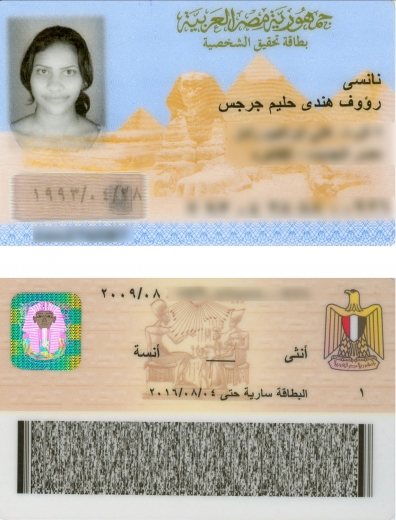
Following years of legal battles and calls for state recognition, two Bahais issued their first national ID in which the religious affiliation field was left blank, instead of falsely listing Islam, Christianity or Judism as their religion. Sixteen-year-old twins Nancy and Emad Hindy issued their ID cards after a legal battle which ended last March with Egypt’s Supreme Administrative Court upholding, definitively, the right of Egyptian Bahais to obtain personal identification documents without stating their religious affiliation. The Administrative Court in January 2008 had allowed Bahais to leave the religious affiliation field on birth certificates and identity cards blank. The Hindys’ case was brought forward by the Egyptian Initiative for Personal Rights (EIPR). “Nancy and Emad issuing ID cards which implementation of the new ID policy is a welcomed [yet] a long overdue step which we have been working on since the court ruling in March,” said chairman of EIPR, Hossam Bahgat. Read full article here: Daily News Egypt Read a similar story at: Baha\’i World News Service |
Posted: 18 Aug 2009 01:32 PM PDT
[Posted on Tuesday, August 18, 2009, at BWNS. Translation by Iran Press Watch.] |
Baha’is on Temporary Leave from Prison Posted: 18 Aug 2009 01:15 PM PDT On separate reports, the Persian page of Baha’i World News Service has advised that Baha’i prisoners in Shiraz and Yazd have been given temporary leave from prison:
On Sunday, August 2, Sasan Taqva had a foot surgery and it not known at this time when he will resume his detention. He has been on leave since July 27. The above three youth were arrested on November 19, 2007, and are completing their four year prison sentence.
On another report, BWNS stated:
[Source BWNS1 and BWNS2. Translation by Iran Press Watch.] |
A Baha’i Sentenced to Imprisonment Posted: 18 Aug 2009 12:05 PM PDT
According to the court ruling, Mrs. Susan Tebyanian[-Jabbari], a Baha’i resident of Semnan was convicted to 18 months imprisonment. In the course of her sentencing, the court noted that because of lack of appropriate facilities in Semnan (given her background), one of the prisons in Tehran would be designated for her by the court. It should be noted her trial took place about a month ago, but the present ruling was issued and communicated on August 12. [Source: August 18, 2009, hra-news]
The Persian page of the Baha’i World News Service provides further details: On June 2, 2009, the trial of Mrs. Susan Tebyanian, a Baha’i of Semnan, took place. She had been arrested on April 27, 2009, and released on bail and surety on May 1. The court sentenced her to 18 months imprisonment on the following charges: § Formation of illegal groups and societies associated with the Baha’i community under the pretext of “moral training classes” § Membership in illegal groups and societies of the Baha’is, such as, “Education Committee”, and “Committee for Training and Education” § Propaganda against the regime and in support of the Baha’is, such as, local gatherings and associations. [Source: BWNS. Translations by Iran Press Watch] |

Iran Press Watch
Subscribe to:
Posts (Atom)