Sunday, November 30, 2008

source: http://www.iranpresswatch.org/2008/11/more-on-the-arrest-of-baha’is-in-yasuj/

More on the Arrest of Baha’is in Yasuj

November 28, 2008

Translated by Ahang Rabbani

According to field reports, three Baha’is in Yasuj, the capital of Kohgiluyeh and Boyer-Ahmad Province, were arrested because of social activities. According to these reports, three Baha’is of this town, namely, ‘Ali-Askar Ravanbakhsh, Zulaykha Musavi (the wife of Mr. Ravanbakhsh), and Ruhiyyih Yazdani commenced classes for [virtues and moral] education of children in July of the present year. However, they were interrogated by the Ministry of Intelligence and their personal property, such as books, CDs, and religious pictures were confiscated.

Following a summons by the Intelligence Ministry, these individuals were arrested on 28 October 2008. After two days during which their family had no news of them, they were told that the three Baha’is had been seized and incarcerated in the central prison of the city.

For some inexplicable reason, the arrested Baha’is remain unable to receive visitors or to meet anyone. The charges against them are stated as “efforts against national security by forming anti-Islamic classes”. It is said their court date is 18 November 2008.


What befell the aforementioned Baha’i activists has a precedent: previously 54 Baha’i youth were arrested in Shiraz because of their efforts to teach underprivileged children, which it was suggested had security implications. Presently three of these youth are imprisoned and are completing their four-year sentences.

[Further to our report on 29 October 2008 under the title “Arrest of Baha’is in Yasuj”, Human Rights Activists of Iran has filed a report on 16 November 2008 at http://www.hrairan.org/Archive_87/1196.html which appears above in translation. The moral educational classes mentioned in this report had no religious content, other than drawing from the great religions of the world to teach moral, ethics, virtues and good citizenship to children of various ages.]


source: http://www.iranpresswatch.org/2008/11/top-judicial-official-orders-review-of-verdict-favoring-baha’is/

Top Judicial Official Orders Review of Verdict Favoring Baha’is
November 28, 2008

Baha’i World News Service issue of 14 Nov reported the following, under the heading, “Top judicial official orders review of verdict favoring Baha’is”:

The head of the Judiciary in Iran, Ayatollah Shahroudi, intervened in an appellate court case that had been decided in favor of four Baha’is, and a second appeals court then ruled against the Baha’is.

The four defendants, all of Hamadan, were accused of “teaching against the regime.” They originally were found guilty, but earlier this year an appeals court overturned the verdict and said the Baha’is were innocent. The appeals court ruled that – given the Baha’is’ claim that not only are they not against the government but are absolutely obedient to it – teaching the Baha’i Faith cannot be regarded as teaching against the regime. The court also stated that it took into account the example of the Prophet and the Immaculate Imams, who urged kindness toward all people.

Ayatollah Shahroudi, however, ordered that the case be reconsidered by a different appeals court, and this time the verdict came back as guilty. This second court explained that Imam Khomeini had said that promoting the Baha’i Faith is equivalent to denying Islam and the Islamic Republic, and also that Baha’i leaders teach their faith in Israel. (The Baha’i International Community states categorically that both of those assertions are false.)

The four Baha’is were sentenced to an unknown period of imprisonment, and one of them was also sentenced to a subsequent three years of exile in Khash.

Iran Press Watch has come across the court ruling document dated 6 October 2008, and for the sake of preservation of historical record we append it below.

Hamadan Court Order (PDF File) - Download here.

Thursday, November 27, 2008

Second Attack on Darzikola Cemetery
November 24, 2008
Translated by Ahang Rabbani

During the early hours of Friday, November 21, once again the Baha'i
cemetery at Darzikola came under vicious attack by hired hooligans.
Only the vigilant attention of the people of Darzikola and
Kafshgar-kola was able to disperse the assailants in a shameful retreat.

In this malicious attack, which once more took place in secret and
under the darkness of night at around 5 AM, the attackers had brought
three heavy earth-movers and two trucks for this purpose. The people
were alarmed and rushed to the cemetery, yet before they arrived, the
attackers had managed to inflict great damage to the site.

Pictures and more details forthcoming.

[The above is a translation of on a report by "Sh" from Qa'imshahr and
posted by Iran Press News on Friday, 21 November 2008 at:
http://www.iranpressnews.com/source/049734.htm. A previous desecration
of this Baha'i cemetery has been reported on this site (Iran Press
Watch) several times in the past.]

Sunday, November 23, 2008

Saturday, November 22, 2008
Egypt: Yet Another Newborn Denied Birth Certificate

A baby, named Shehab Shady Moussa, was born in Cairo on the 9th of November of this year to Baha'i parents. When his father went to the civil affairs agency, charged with registering newborns and producing their birth certificates, he was told that they received recent instructions from the Ministry of Interior forbidding them from issuing birth certificates to Baha'is. This is despite multiple court rulings ordering the Ministry to issue certificates to children born to Baha'is with dashes "--" inserted in place of their religious identity.

This news item was published in today's edition of Cairo's Al-Badeel newspaper (attached, with a photograph of the Minister of Interior, Habib Al-Adly). The baby's father told the newspaper that this means that his newborn child cannot be counted in Egypt's census, he cannot be vaccinated against serious infectious diseases and that the baby's mother cannot obtain maternal leave from her employment.

This newborn can be now added to a long list of Egyptian children, born to Baha'i parents, who live in the shadows, and whose existence has been denied by their own government. They are deprived of all their human and civil rights, including the rights to health care and education. By doing so, Egypt continues to be in gross violation of all international covenants that guarantee the rights of man, to which Egypt is a co-signatory.

The entire world must express its outrage at this inhumane treatment of children in a nation considered to be a so-called mainstream, moderate and modern, as well as one that is regarded to represent a unique ancient civilization--admired by all. Is this what Egypt wants to be remembered by? One would doubt this very much, and one would expect otherwise.

Sunday, November 16, 2008

Defenders of Baha'is in the Middle East Prominently Featured

Posted: 15 Nov 2008 01:13 PM CST

The Muslim Network for Baha'i Rights (MNBR), an independent website organized by youth from the Middle East and dedicated to the defense of the Baha'is in the region, was just featured in The Media Line (TML) website.

As pointed out in its information page:
The Media Line™ (TML) is a unique non-profit news organization established to enhance and balance media coverage in the Middle East, promote independent reporting in the region, and break down barriers to understanding in the Arab and Israeli journalism communities.

TML’s mission is to provide credible, unbiased content, background and context to local media outlets throughout the Middle East and around the world, including the United States, Canada, Europe and Australasia.

In addition to its own reporting, which reaches millions of news consumers daily, TML promotes accuracy and fairness among other regional journalists by designing and implementing ongoing educational, training and dialogue-building projects.


here is the article for easy readings
Muslims for Baha’i Human Rights
Written by Esra'a Al Shafei
Published Thursday, November 13, 2008


Iran might be famous for Avicenna, the Cyrus cylinder, and its leaders' scathing remarks, but for over 6 million Baha'is across the world, it holds a special significance, as it is the birthplace of their faith.

Founded a century and a half ago, the Baha'i faith encourages the independent investigation of "truth," and calls – among other things – for the unity of religion and humankind, and the elimination of gender inequality. However, one of its central tenets – that Islam is not the final revelation of God – has led to it being declared a heresy, and its adherents denounced as apostates.

The earliest followers of the Baha'i faith in Iran experienced imprisonment, expulsion and execution, but as the faith's followers grew in number and spread over more countries in the region, it soon became evident that other states would not provide a safe haven for Baha'is to freely practise their faith.

Communities from Morocco to Egypt, Iraq, Yemen and elsewhere underwent an onslaught of propaganda attacks and arrests, and several countries placed a ban on all Baha'i activities.

While in recent years the situation of Baha’is has improved (with Indonesia, for instance, repealing a ban on Baha’i activities), Iran remains the only country where Baha'is experience grave persecution. To date, however, hardly any Muslim-majority countries recognize the Baha'i faith as an independent religion. The lack of recognition rendered many Baha'is incapable of obtaining identification documents, effectively denying them their right to equal citizenship.

The Muslim Network of Baha'i Rights was founded in an effort to address and challenge the discrimination that Baha'is have to suffer under the supposed banner of Islam. Its mission is to secure their basic human rights within our societies, through raising awareness of the plight of Baha'is in many Muslim-majority countries, and encouraging fellow Muslims to speak out against such injustices.

Propaganda campaigns (spread primarily by state-owned media and religious clerics) have led to a deep and dangerous misunderstanding amongst many Muslims of Baha'is and their faith, wrongly associating them with political ideologies like Zionism or referring to them as "Satanists."

Since Baha'is are often censured within the mainstream media, such claims are hardly corrected, putting members of the faith in a very difficult situation. It is our responsibility as Muslims, and as members of the dominating majority, to raise awareness of who Baha'is actually are and to make sure that they are treated equally within the law and society. They are citizens of our countries regardless of their faith, which for the record is extremely respectful of Islam.

As practising Muslims we don't believe in the Baha'i faith, but why should that stand in the way of granting them their full rights? Why should our religious differences justify decades of abuse, wrongful imprisonment, murder, denial of education, and other crimes?

Baha'is have been ignored in their requests for peaceful coexistence, and despite the abuse they have never resorted to violence. It is therefore time for us to stand up and demand that their rights are fully ensured and legally protected. It is time for us to help Baha'is factually refute wrong accusations within regional media outlets that have dire consequences for their security.

As a strategy, and a recruitment tool, we have relied on the power of the Internet, the most open network in the world, to reach our target audience in an honest, uncensored fashion. It is to our advantage that increasingly more people rely on the Internet for news instead of traditional media, which in much of the Middle East is heavily censored. Many curious people resort to the Internet for research because of the amount of information that resides in it.

One of our biggest accomplishments was our successful utilization of creative media in order to raise awareness about the abuse perpetrated against the Baha'i minority in the Middle East, and encourage others into taking action.

Before any significant changes are made to the perceptions of citizens of the Middle East, or discriminatory laws are removed, it is important that we start a discussion, and our media productions have been more successful than any written post in achieving that.

Our first video campaign was documented in one of Egypt's most prominent papers within one week of its launch. Some of our comics have also been published and used in relevant conferences around the world. When the site was first established in the summer of 2007, it was covered by BBC Persian Service in an exclusive article only three weeks later. We owe this success to the accessibility of the Internet, where we break our way into global media outlets without having to worry about censorship.

Despite the amount of controversy we continue to stir in the Muslim world, we are committed to the cause of championing equal rights for the Baha’i minority in the region.

Esra'a Al Shafei is the executive director of MideastYouth.com and the Founder of the Muslim Network for Baha'i Rights. She is based in
Bahrain.

Copyright © 2008 The Media Line. All Rights Reserved.

Saturday, November 01, 2008

Baha'i Faith in Egypt


Eloquent Review of the Case of the Baha'is of Egypt

Posted: 31 Oct 2008 07:56 PM CDT

The prominent Lebanese website Menassat [Platforms] has just published an article, written by the journalist Alexandra Sandels, and based on an interview with an Egyptian Baha'i blogger. The most striking aspect of this article is that it, very nicely and very clearly, presents and defines the case of the Baha'is of Egypt. It is also very timely, particularly when considering the imminent supreme court final decision awaited by many on the 3rd of November.

Regarding the website, it is described as follows:
Menassat.com is a website focusing on news, trends and events concerning the media in the twenty-two countries of the MENA region (Middle East & North Africa, defined as the twenty-two member states of the Arab League).

Menassat literally means "platforms" in Arabic; it also holds the acronym for the MENA region.

Our goal is to promote good journalism in the region by providing a platform for Arab journalism as well as specific tools to empower Arab journalists.

Menassat's editorial team is based in Beirut, Lebanon, with correspondents throughout the region....
The full article is posted below with credit to Menassat.

Setting the record straight about Egypt's Baha'i


Posted October 30th, 2008
Followers of the Baha'i faith in Egypt are living as second-class citizens because the authorities do not recognize their religious affiliation on official documents. MENASSAT met with Baha'i blogger Shady Samir, who uses the Internet to advocate for the rights of Egyptian Baha'i.
By ALEXANDRA SANDELS
Shadi ID
Shady Samir, and the old ID card that allowed Egyptians to avoid stating their religion. The new ID cards no longer have that option. © Alexandra Sandels

CAIRO, October 29, 2008 (MENASSAT) – It has been fours years since Shady Samir lost his father, but the Egyptian state still doesn't consider him to be officially dead.

Samir's father was an adherent of the Baha'i faith, and in order for him to obtain a death certificate, he would have to posthumously convert to one of Egypt's three official faiths – Christian, Muslim or Jewish.

It is only one of many problems faced by the adherents of the Baha'i faith in Egypt.

It was issues like these, coupled with the misinformation being spread about the Baha'i faith that prompted Samir to join the information war and "set the record straight" with his blog Egyptian Baha'i.

The Baha'i religion was founded by Bahá'u'lláh in nineteenth-century Persia. It emphasizes the spiritual unity of all humankind. There are an estimated five to six million Baha'i around the world in more than 200 countries and territories

Stateless

Samir's father may remain officially "alive" for some time to come, seeing that he specifically asked his family not to resort to a posthumous conversion to obtain the death certificate.

"It was his last will to die as a Baha'i," Samir told MENASSAT.

Official papers like identity cards and birth certificates are obligatory in Egypt and not having them can cause immense obstacles. Egyptians cannot enroll in schools or universities, receive medical treatment, or even buy a car without a national ID card.

Those Baha'i who refuse to change religion on their official papers effectively become "stateless" in their own country, without the right to access the most elementary public services.

Instead, most Baha'i tend to possess passports – the only official Egyptian document that doesn't require statement of religious affiliation.

"The government certainly makes it easy for us to leave. Is it done on purpose? I don't know," Samir shrugs.

WATCH THE TRAILER FOR AHMED EZZAT'S FILM, IDENTITY CRISIS


In a bid to regain their basic rights in their own country, Egypt's Baha'i community has been fighting a court battle since 2004 to get their faith recognized on the new, computerized ID cards. Egypt's Supreme Administrative Court reversed a December 2006 ruling in favor of the Baha'i after the government appealed.

Legal battle

Since then, the Bahai community have gone back to demanding the right to leave the religion field on official papers blank.

"We want our documents without being forced to write something we're not. It's as simple as that," says Samir.

A court case involving three Bahai citizens demanding this right has been on-going for some time.

The suit concerns 15-year-old twins Imad and Nancy Raouf Hindi, who found themselves unable to obtain birth certificates unless they claimed to be Muslim, Christian or Jewish.

It also involves 19-year-old Hosni Hussein Abdel-Massih, who was suspended from his university due to his inability to present an identity card.

On January 29, 2008. Cairo's Court of Administrative Justice again ruled in favor of the Baha'i plaintiffs, allowing them to obtain birth certificates and identification documents without being required to state a religious affiliation.

But Egypt's Ministry of Interior has yet to implement the ruling and Egyptian Baha'i remain in a legal vacuum.

"Now when you ask for ID papers, they tell you to wait for the final verdict in the case," Samir sighs.

After the initial December 2006 ruling, there was a lot of coverage of the Baha'i in the Egytpian media. But Samir felt it often misrepresented his religion or in some cases even slandered it.

It was what spurred him to start his blog, Egyptian Bahai.

"It is an outlet for me to correct false information that is said about us on blogs and in the media. I mainly target news that spreads untrue information about the Baha'i," he says.

Death threats

Samir gets "lots of feedback" on his blog, he says. but the majority of it is negative.

"I get comments like 'The Bahai faith is not a religion. Stop and think about what you are doing.'"

One message read, "If I see you I will kill you."

The situation of the Egyptian Baha'i has attracted the interest of Egyptian and international human rights organizations.

Several protests were staged in Cairo during in 2006 and 2007 in support of the Baha'i, in which activists held up enlarged versions of Baha'i ID cards.

In February 2007, freelance Egyptian filmmaker Ahmed Ezzat released the documentary "Identity Crisis," in which he portrayed the situation of the Baha'i.

The film focuses in part on the December 2007 verdict. It shows a group of Islamist activists at the courthouse triumphantly shouting "Allahu Akbar" (God is Great) while holding up the Quran before a stunned group Baha'i, human rights activists and journalists.

One of the Islamist activists, Mohamed Salem, proceeds to state before the camera that Baha'i are apostates and that "infidels should be killed."

The film goes on to interview rights activists and Egyptian Baha'i such as Dr Basma Moussa, an assistant professor in oral surgery at Cairo University, who claims that Egypt's highest Islamic institution, Al-Azhar, issued a certificate stating she was an apostate, which delayed her tenure for several years.

Ezzat's film was banned from several Egyptian film festivals, including the Alexandria Film Festival.

Samir, whose wife is American, recently obtained his Green Card for the US, but he says that he won't leave his country until he is granted his rights.

"I don't want to run away. I will receive all my rights. I believe that," he says.

Baha'i have lived in Egypt for more than a hundred years. In 1924, Egypt became the first Muslim country to recognize the Baha'i faith as an independent religion apart from Islam.

But ever since President Nasser shut down the Baha'i national assembly in the 1960s, and the government proceeded to confiscate Baha'i properties such as libraries and cemeteries, there has been no official record of the group.

Baha'i institutions and community activities remain banned under Egyptian law to this day.

Wednesday, October 29, 2008

Baha'i Faith in Egypt & Iran


Baha'i Faith in Egypt


Egypt Drops Allegations of Baha'i Links to Zionism

Posted: 28 Oct 2008 05:25 PM CDT

In a surprise move, Egypt's Ministry of Religious Endowment (Awqaf) has just made public statements that vindicate the Baha'is of Egypt of any links to Zionism--accusations that were previously alleged, without any proof, by the same Ministry.

This new development was published in Copts United website two days ago. The independent site of the Muslim Network for Baha'i Rights (MNBR) provided a translated summary of the article in one of its recent posts. The following is some of what the Network has provided in its post.
In an unprecedented move that represents a positive development in the dealing of the Ministry of Religious Endowments with Egypt’s Baha’i community, Sheikh Salim Abdul Jaleel - the under-secretary for religious advocacy, gave the following response to a query on the Ministry’s accusations that Egyptian Baha’is support the Zionist movement:
There is no proof available that incriminates the Baha’is of Egypt with supporting Zionism. But I generally say that the existence of any sect that follows a faith that isn’t divinely inspired serves our enemies. But to state the the Baha’i Faith serves Zionism or that it’s related to it or that its movements are dictated by Zionism or that it is linked to it - these are all accusations that lack evidence, and it’s being repeated by the Intelligence agencies, and not Islamic scholars.

Not only do we accept calls for dialogue, but in fact we call others with whom we disagree to dialogue in order to reach a common ground.

Previously, however, the Ministry of Endowment had been quite vocal in its opposition to the Baha'is as was described in a previous post, quoted below:
...the Ministry of Religious Endowment, headed by Mr. Zaqzouq, has just instructed all mosques in Egypt to launch an attack on the Baha'is. The second, attached, Rose Al-Youssef newspaper article, published today, proudly announces this fresh piece of news.

In brief, the article states that the Ministry has distributed to all Mosque leaders (Imams) a book called "Baha'iy'ah and the position of Islam," aimed at telling people to watch-out for those Baha'is who are out to get them and destroy Islam in the process.

The book, and the article, repeat the usual falsehood that has been propagated in Egypt (and Iran) about the Baha'is, that is: the usual unfounded propaganda about connections to Zionism, etc.... It accuses the Baha'is of being apostates, and explains how Sheikh Al-Azhar in 1947 had classified them as such, and had declared their marriages to be null and void. It even incites Egyptians "to warn their youth about the dangers of 'Baha'iy'ah' so that they don't fall for its entrapment."

It must be emphasized that this development should be regarded as a very significant change of course in the position of this Ministry which, among its other responsibilities, is charged with overseeing all mosques and Islamic religious institutions in the country.

This also speaks for an emerging current of understanding and acceptance that appears to reflect a better appreciation of what the Baha'is are all about. The government and its agencies, as well as numerous prominent members and leaders of the society, appear to be learning the truth about the Baha'i Faith and the desire of the Egyptian Baha'is, as obedient citizens and well-wishers of their homeland, to join hands with their fellow Egyptians in promoting their collective welfare.

Although this transition is gradual and guarded, it demonstrates that the Egyptian authorities are finally nearing the conclusion that Baha'is are indeed well-wishers of their beloved country and that their intentions are to serve their fellow citizens and to promote unity and harmony wherever they reside. It is only natural that this gradual change of heart is happening...it is because of the unshaken course pursued by the Baha'is of Egypt in their struggle. They have always responded to aggressors with dignity, respect and resilience, even when they were faced with unprecedented vicious attacks by some. Additionally, while maintaining their composure and dignity, they have never hesitated to refute misrepresentations of their religion by some of the media and by the extremist elements of the society.

Friday, October 24, 2008

IRANIAN REPORT CONFIRMS INNOCENCE OF SHIRAZ BAHA'IS

NEW YORK, United States, 24 October 2008 (BWNS) -- An Iranian inspector who examined the 2006 arrests of a group of young Baha'is in Shiraz, Iran, filed a confidential report dated June 2008 confirming what Baha'is have said all along: that their activities were strictly humanitarian in nature and did not involve the "illegal" teaching of the Baha'i Faith.

The report, signed by an "inspector and legal advisor" named Rustami, was published by the Human Rights Activists of Iran on 23 October. The report was addressed to the "esteemed representative of the supreme leader in the province" and states that it was done at his request.

Three of the 54 Baha'is who were arrested were later sentenced to four-year prison terms and are still incarcerated in Shiraz.

The report states that not only was there no mention of religion in their activities, but that youths who attended the classes told him they wanted to continue. "They stated 'We ... truthfully learned a lot from this group and would like them to come back to us again,'" the investigator said in his report.

A Baha'i spokeswoman said the report underscores the injustice perpetrated against the Baha'is.

"It is a manifest injustice that the young Baha'is of Shiraz continue to remain in prison when even an internal investigation has essentially proved their innocence, even under the twisted terms that define criminality in Iran," said Bani Dugal, the principal representative of the Baha'i International Community to the United Nations. "The government's lies are indefensible," she added.

The arrests in May 2006 garnered international news media attention and prompted expressions of concern by many governments.

The group, composed of 54 young Baha'is and a number of Muslim friends, had been engaged since 2004 in a series of humanitarian projects to promote literacy and moral empowerment among underprivileged youth in and around Shiraz, mostly through small-group classes organized on Friday mornings in poor neighborhoods.

Members of the group were rounded up by government agents on 19 May 2006. While their Muslim colleagues and one Baha'i among them were released immediately, 53 Baha'is were held for periods ranging from several days to more than a month.

Then, in mid 2007, they were convicted on spurious charges, apparently relating to accusations that they had been engaged in the "indirect teaching" of the Baha'i Faith, considered illegal in Iran despite international laws upholding freedom of religion. Later, in January 2008, while speaking to journalists about the imprisonment of three of the group, a government spokesman said they had been engaged in anti-government "propaganda."

However, the confidential report, issued 16 June 2008 and addressed to the "representative of the Supreme Leader in the province (of Fars) and the Imam Jum'ih of Shiraz," states that all of those interviewed for his investigation indicated there was no mention of the Baha'i Faith during the classes - essentially contradicting the government's claim.

The investigator states, for example, that he interviewed local young people who participated in classes led by the Baha'is, as well as a retired police colonel, and all stated that the classes were strictly educational in nature.

"'From the beginning of their activities..., these individuals held these charitable, humanitarian classes once a week, helping junior youth and youth,'" the report says, quoting a retired police colonel by the name of Jeddi. "'The activities of these classes were writing, drawing, and teaching hygiene and moral values, and there was no mention of religious or political matters. There was never any mention or any statement regarding Bahaism.'"

Inspector Rustami also said he interviewed eight of the young people who participated in the classes. "They stated that this group had been involved in activities such as teaching moral education, drawing, calligraphy, social skills, and that there had been no discussion concerning politics, or discussions which were against religious, legal and cultural standards."

The three Baha'is in prison are Haleh Rouhi, Raha Sabet, and Sasan Taqva. Last January, Amnesty International issued an action alert on their behalf, suggesting they were prisoners of conscience, held solely for their religious beliefs.

Ms. Dugal said the arrests and imprisonment of the Baha'is have always been wrongful, since in any event international law protects the right to "teach" one's religion.

"However, in this case, no such 'teaching' was done," she said. "The Baha'is and their Muslim colleagues were solely engaged in a humanitarian effort to serve poor children and young people in their region through free classes in literacy, hygiene, and the promotion of good moral values.

"For this effort, three Baha'is are being held in prison, which, in light of this new report, has become a matter of unconscionable cruelty, One of the individuals imprisoned went for a time without proper medical treatment for an injury to his leg, suffered after an automobile accident.

"Our hope now is that with the public release of this report, the Iranian government will release the three and exonerate them and the other 50 people."

"Further," said Ms. Dugal, "we would expect the Iranian government to end its long-running campaign to blacken the name of Iranian Baha'is through similar false charges - and to release others that have been similarly accused, such as the seven Baha'i leaders currently being held in Evin prison."

(To visit the Web site of Human Rights Activists of Iran, which has the original document in Persian, go to: http://hrairan.org/Archive_87/1135.html)


To view the photos and additional features click here:
http://news.bahai.org

--
8-bp-081024-1-
IRANSHIRAZINSPECTOR-661-S


------------------------------------------------------------------------------
Advance release: Please check our website for the final version of this
article.
------------------------------------------------------------------------------
Copyright 2008 by the Baha'i World News Service. All stories and
photographs produced by the Baha'i World News Service may be freely
reprinted, re-emailed, re-posted to the World Wide Web and otherwise
reproduced by any individual or organization as long as they are
attributed to the Baha'i World News Service. For more information, visit
http://news.bahai.org.
------------------------------------------------------------------------------
If you have questions about this list or wish to unsubscribe, contact
subscribe@bahai.org
------------------------------------------------------------------------------

Reply

Forward


Wednesday, October 22, 2008

UN REPORT CITES IRANIAN GOVERNMENT'S VIOLATIONS AGAINST BAHA'IS

UNITED NATIONS, 22 October 2008 (BWNS) -- U.N. Secretary General Ban Ki-moon has expressed his concern over human rights violations in Iran against Baha'is, other minorities, women and juveniles.

In a 20-page document released on Monday, Mr. Ban responded to a request from the General Assembly last December for a "comprehensive report" on the human rights situation in Iran.

While noting some positive achievements, Mr. Ban stated that although Iran's constitution guarantees a wide range of fundamental freedoms, "in practice there are a number of serious impediments to the full protection of human rights."

His report expressed concern about the use of torture, a "high incidence of executions," and "an increase in rights violations targeting women, university students, teachers, workers and other activist groups."

The report devoted nearly a full page to the situation of Iran's 300,000-member Baha'i community, which is that country's largest religious minority. The report points out that Article 14 of the constitution of the Islamic Republic of Iran stipulates "protection for non-Muslims."

Yet, "reports continue to be received about members of the Baha'i community being subjected to arbitrary detention, false imprisonment, confiscation and destruction of property, denial of employment and government benefits, and denial of access to higher education," Mr. Ban's report said.

"A significant increase has been reported in violence targeting Baha'is and their homes, shops, farms and cemeteries throughout the country. There have also been several cases involving torture or ill-treatment in custody."

Mr. Ban expressed concern over the harassment of Baha'i schoolchildren and the arrest of seven Baha'i leaders earlier this year.

"While the secretary general's report recognizes some advances that Iran may have made, it points out that the government of that country has committed many clear and egregious violations of human rights against Baha'is and others," said Bani Dugal, the principal representative of the Baha'i International Community to the United Nations.

"It is important to note that the report comes directly from a request last year by the General Assembly in its resolution on Iran, demonstrating once again the critical role of the international community in bringing human rights violations to light," Ms. Dugal said.

"We hope that the General Assembly will pass a resolution again this year to put pressure on Iran to meet its commitments to international standards," she said.

To read the full report: http://www.un.org/Docs/journal/asp/ws.asp?m=a/63/459


To view the photos and additional features click here:
http://news.bahai.org

--
22-sw-081022-1-IRANBANKIMOON2-
660-S


------------------------------------------------------------------------------
Advance release: Please check our website for the final version of this
article.
------------------------------------------------------------------------------
Copyright 2008 by the Baha'i World News Service. All stories and
photographs produced by the Baha'i World News Service may be freely
reprinted, re-emailed, re-posted to the World Wide Web and otherwise
reproduced by any individual or organization as long as they are
attributed to the Baha'i World News Service. For more information, visit
http://news.bahai.org.
------------------------------------------------------------------------------
If you have questions about this list or wish to unsubscribe, contact
subscribe@bahai.org
------------------------------------------------------------------------------u

Tuesday, October 21, 2008


Permets, ô mon Seigneur, à tous ceux qui sont montés vers Toi, de trouver refuge en Toi qui es le compagnon suprême. Accorde-leur de séjourner à l'ombre du tabernacle de Ta majesté et dans le sanctuaire de Ta gloire. Que l'océan de Ta clémence rejaillisse sur eux, ô Seigneur, et les rende dignes de résider éternellement dans Ton royaume céleste et sous Ta domination suprême. Tu as le pouvoir d'agir selon Ton désir.
(Extrait du livre d
Publish Post

prière, page 77 et 80)
Ouvrir le livre Livre de prières

Monday, October 20, 2008

Features
Iran's Baha'is Leave Persecution Behind On Train To Istanbul

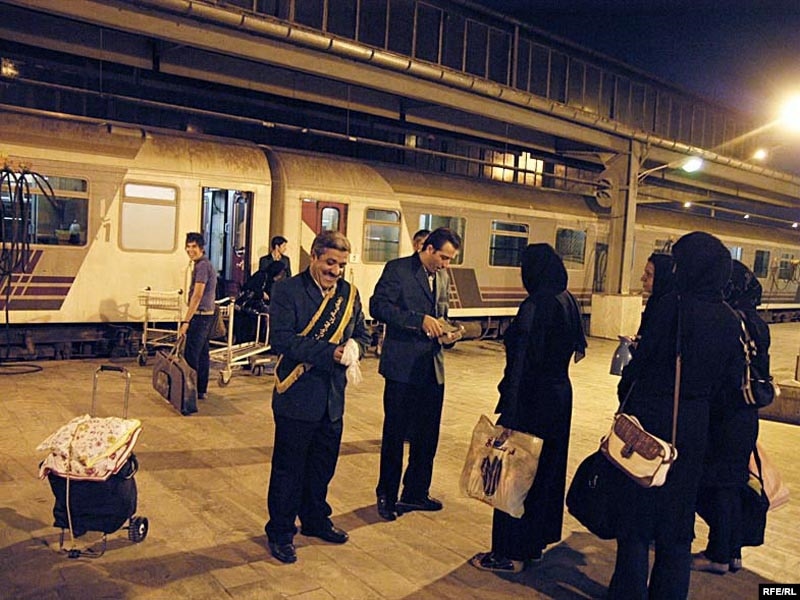
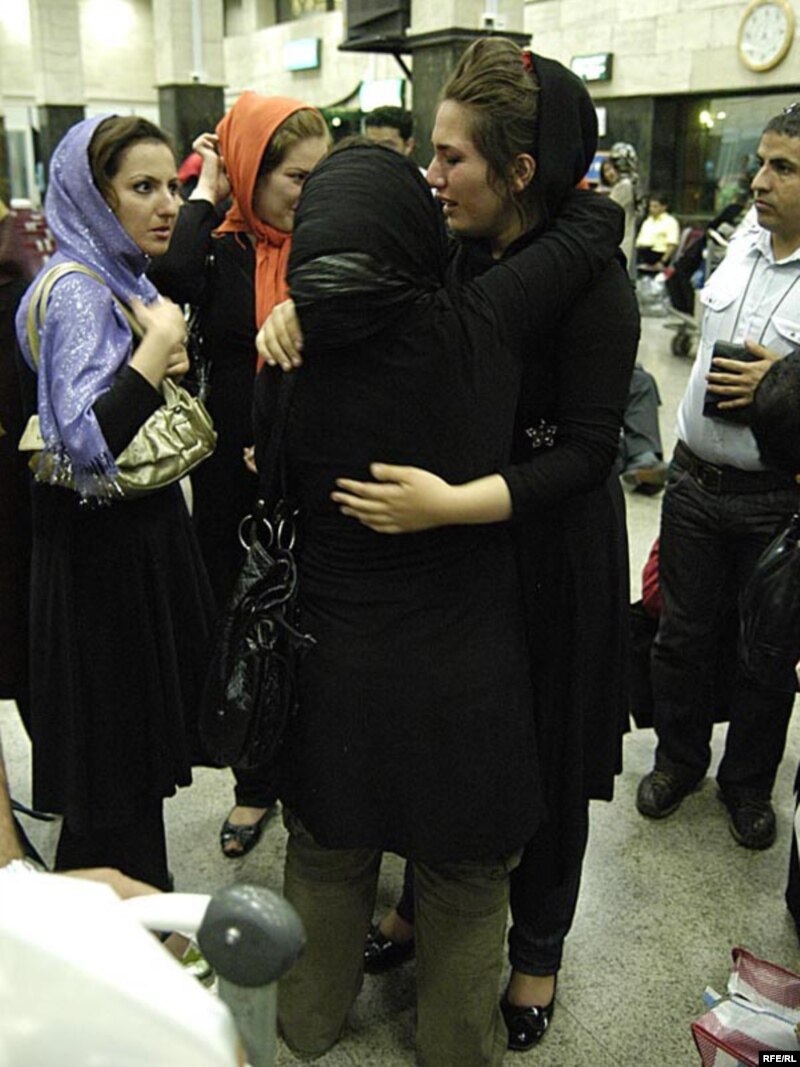
Tehran's railway station, the scene of many tearful good-byes
October 20, 2008
By Asha Shahir

Every Thursday at dusk, members of one of Iran's most beleaguered religious minorities gather at Tehran's railway station.

With anxious, teary eyes, they are there to see off relatives and fellow Baha'is who have decided to pull up stakes forever and take the 8 p.m. train to a new life in Turkey.

The Tehran-Istanbul line has been running weekly for 12 years now, with every trip carrying Baha'is away from the discrimination they live with in Iran.

The country's largest religious minority, the Baha'is have faced discrimination ever since their religion was founded in what is now Iran in the mid-19th century.

But Iran's Islamic Revolution brought a turn for the worse. The new constitution gave no official recognition to the faith, seen as a false religion by the fledgling regime. The surge in persecution and harassment led many of Iran's 300,000 Baha'is to consider their options, and for the past 30 years a great number of them have chosen to leave.

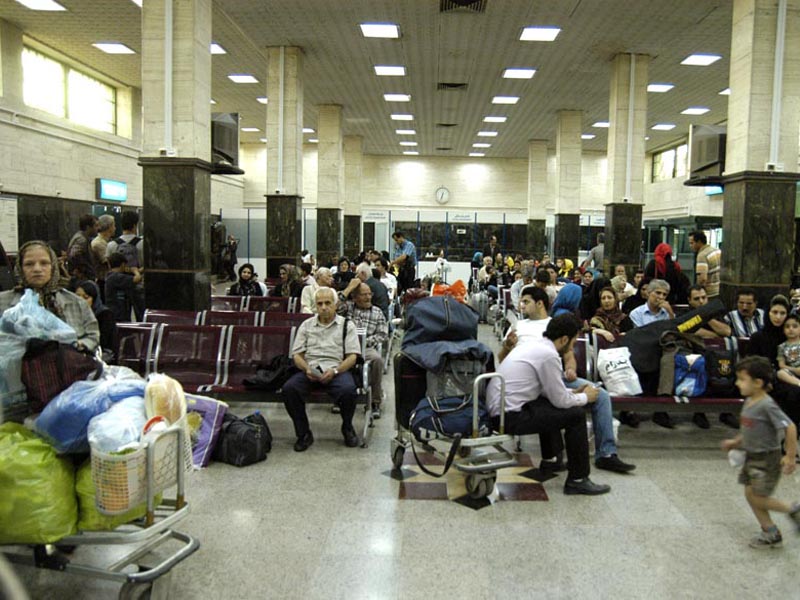
This evening, approximately 200 passengers are making the trip to Turkey. Dozens of them are Baha'is on a one-way ticket.

A Cup Of Tea

I will be on the train for days, with a stop 60 hours into the trip in Kayseri, a Turkish city along the route to Istanbul that has become a popular end stop for Baha'is.

"On this train everyone has excess baggage, how come you don't have any at all?" a bewildered cargo attendant asks as I prepare to board.

The comment grabs the attention of two middle-aged women within earshot. Turning to me, they ask if I can check in some of their excess baggage to spare them paying an additional $110. "In return, we will give you freshly brewed tea on this long three-day trip," they offer.

Many take all they own.
Just 10 minutes late, the train departs. After settling in, I leave my compartment to find the two women.

At the station, I had seen a boy crying as they embarked. When I ask one of the women why, she says he was the youngest member of the family, and that she had to leave him behind.

"Poor boy, he feels really lonely now," she says. "If he had his passport, he would have come with me, but now he might have to leave the country in an unauthorized, illegal way."

If We Could Stay

During the journey, a number of the more than 80 Baha'is on the train agree to speak anonymously about their reasons for leaving Iran.

"After the revolution I was made redundant at the Education Ministry and I had to rent a cosmetics shop. It was okay until 10 years ago, when they declared my working license null and void," says one man.

He says he managed to send his two sons to Pakistan and, with the help of the Baha'i community, they then moved on to the United States.

"Now, my two daughters are older and want to continue their studies. Since we cannot let them go on their own, my whole family had to leave," he explains.

"We sold everything we had and we don't want to go back to Iran. We plan to stay living in Kayseri for some time until the United Nations or the Baha'i community does something for us," he says.

"We brought some necessities to avoid paying more for them in Turkey. It's not clear how long we will stay there -- a year, 10 months -- and since I probably won't be able to find a job right away, we brought some rice and cooking oil as well," he adds.

I ask why his family chose to leave by train.

"Certainly we would not have been able to take all this with us on a plane," he says of the family's excess baggage. "The train is much cheaper than a plane, and stops at Kayseri."

The family paid $700 for train tickets, an amount he says places a significant burden on his and other families.

"All of us in this train have relatively low incomes, and we have been under so much pressure over the years that we are without a penny to our name," he says. "Even now that we are heading to Kayseri, we have all our hopes in God, because we know we have hard days ahead of us.

"If only we could stay in Iran and live like other people," he laments.

Life In Limbo

"It's been more than two years that my two daughters have been in Kayseri," says a middle-aged woman from Babol, in northern Iran, who is traveling with her husband. "The UN is supposed to do something for them so they can go to America and continue their studies, but it is not yet clear when they will be able to go. In one or two years' time? Could it be tomorrow?"

She is aware that her daughters may have a long wait ahead of them, recounting the story of friends who spent four difficult years in Turkey before they were able to move to Canada.

"This is the fifth time we have been on this train to Turkey to visit our daughters to take them some money and foodstuffs," she says, expressing thanks to God that her family is somewhat well-off.

"My husband and I have worked all our lives and we have managed to make some savings to bring up our children," she adds. "Some international aid organizations have helped our daughters live their lives in Turkey until they can go to the country they want."

I ask why she doesn't emigrate herself. What keeps her and other Baha'is in Iran considering the hardships they face?

"As far as I know, most of our fellow Baha'is love Iran and would like to earn an honest living there and serve their fellow countrymen," she replies. "I consider myself one of them."

Nobody likes to be driven from their home, she explains, and the Baha'is who have left Iran had good reason.

"Most of them have left their country because of their children's future. Some have left their homeland because they were fired and they couldn't find a proper job. And after the executions in the early years of the revolution, some left because they feared for their lives," she says.

"Of course, the situation is not that bad anymore. But still, as a result of the difficulties Baha'is face in Iran, they are forced to leave."

Alone On Deck

The train to Istanbul passes plains, mountains, lakes, and rivers. Thirty-six hours after leaving Tehran, and six hours from the Iranian border, we reach Lake Van.

Passengers making the trip to Turkey along with two wagons carrying cargo are unhitched and transferred to a Turkish vessel that will ferry them across the lake. On the other side, they will switch to a Turkish train in the city of Tavan.
Some families may not see each other for years.


Along the way, some of the passengers dawdle on deck, while others head inside to gain their strength for the rest of the trip.

I see a young woman gazing at the horizon, leaning on the ship's railing. "I am 18, from a Baha'i family, and I am here to follow my destiny," she answers when I ask about her reasons for leaving Iran, apparently on her own.

"I want to live in a free country, continue my studies, and express my opinions and beliefs," she says. "I want to live somewhere where nobody asks me 'why.' For me, Iran is a country where you have so many 'whys' to answer. 'Why are you a Baha'i? Why are you this? Why are you not that?' I want to live freely, with no problems in life, where I can achieve my desires."

Despite its failings, she says, she loves Iran.

"I have lots of close bonds to the people there, but to have a better future I had to leave my homeland," she says, adding that her goal is to stay in Turkey until she can move to the United States to study medicine.

"The Baha'is in Iran suffer a lot, but they are patient and forbearing," she adds. "They all hope that one day things will get better, but that day never seems to come."

A Defeated Mother

With tearful eyes, a woman on the train introduces herself to me like this: "From the very first day of my life I have been in sorrow and agony, but because of the love in my heart for my homeland, I never thought of leaving."

She has worked as a dressmaker since the first day of her marriage 27 years ago in order to help her husband -- who works as a taxi driver despite having a university degree -- put food on the table.

"We did all we could to keep our children in Iran and see them succeed in life," she says. "But I have to confess that all that pressure has made a loser of me. I feel utterly defeated."

While she did what she could to avoid leaving home, everything changed when her daughter came to her and said she planned to leave Iran.

"For the next five or six months I kept trying to talk her out of it, but in the end it was I who gave up, because I realized she was right in coming to this decision. But believe me, even now all my heart and soul belongs to Iran."

Finding A New Home
http://gdb.rferl.org/FE4CB610-941D-4B56-8358-B37F81A63448_mw800_mh600.jpg
At 8 a.m., the train finally reaches Kayseri, ending the long trip for many of the Baha'is. They are greeted warmly by members of their new community.
http://www.rferl.org/
After 10 minutes, the train leaves the station to continue on to Ankara and Istanbul.

Upon returning to my compartment, I am pleased to find a pot of freshly brewed tea awaiting me.

As promised, I will have enough to make it through the rest of my journey.

Asha Shahir is a correspondent for RFE/RL's Radio Farda

Monday, October 13, 2008

Iran's Baha'is Caught Between Apostasy Law and Barriers to Education


Posted: 12 Oct 2008 05:49 PM CDT

Iran continues to deprive Baha'i students of their right to education. A recent article in the Baha'i World News Service states:
Baha'i students attempting to gain admittance to universities and other institutions this fall found that their entrance examination results were frozen and their files listed as “incomplete” on the Web site of the national testing organization.

Baha’is who had successfully enrolled in universities in previous years continue to be expelled.

And those who have sought redress through the courts have been disappointed, their cases rejected.

The website of the Muslim Network for Baha'i Rights, an independent site launched by a group of Muslim youth, has recently published a post about the resentment expressed by Muslim youth of the flagrant violation of the rights of the Baha'is of Iran. In that article, the site published a comic that depicts the students' dilemma. They wrote the following:
Over the past two years a new tactic was employed: namely, denying Baha’i students admission by alleging their files are incomplete. Last year, almost 800 (of over 1,000) students had their dreams shattered this way. But this year, when trying to login to the national university examination website, Baha’i students were redirected to: http://82.99.202.139/karsarasari/87/index.php?msg=error_bah

Whether the Iranian authorities were caught in the folly of their ways, or “error_bah” was intentional is a tough call. But should the authorities want to upgrade their message for the next academic year, we have a fitting suggestion:


Subsequently, the same site published another post with a new comic addressing the apostasy law contemplated by Iran's government. The introduction to the comic is quoted below:

You may have heard about the “Apostasy bill” in Iran, which left many shivering in fear. If passed, it will be considered a “criminal” act to convert to another faith (or to simply be a part of another one.)

The Christian and Baha’i communities of Iran are most likely to be affected by this decision.

This comic was inspired by this news, to show the absurd measures that the IRI is taking to persecute innocent minorities in Iran.


Sunday, October 12, 2008

Tehran to Host "Religion in Modern World" Conference

--The International conference of "religion in the modern world" will be held by Geneva-based Foundation for Dialogue among Civilizations in Tehran on October 13.

The conference will be held in cooperation with Oslo-based Center for Peace and Human Rights headed by former Norwegian Prime Minister Kjell Magne Bondevik.

The conference is a follow-up to last June's conference.

Prominent scholars from France, Spain, Italy, Ireland, the United States, Egypt, Sudan, Morocco, Bosnia and Pakistan will discuss in the conference different topics ranging from "relations of religion and politics, and the reciprocal effects of religion and politics on reducing international tensions" to " ways for launching strategic relations between Islam and West".

Former Secretary General of the United Nations, Kufi Anan, former secretary general of Unesco Federico Mayor and former chairman of the European Commission Romano Prodi as well as former presidents and prime ministers of Switzerland, Ireland, Portugal, Sudan , France and Bosnia will be attending the conference as special guests of former Iranian president Seyyed Mohammad Khatami.

now a reflection

Their will be famous guest from several countries: Kofi Annan(UN, Gahna), Romano Prodi (Italy) Leonel Jospin (France), Frederico Mayor (UNESCO; Spain), Kjell Bondevick (Norway), Mary Robinson (UN; Ireland), John Esposito (University of Georgetown), Jorge Sampaio (Portugal), ... all special guest of former Iranian President Mohammad Khatami!

I just wonder if any of those foreign guests ever paused for a second to think if Iran is the right country to launch such an initiative. I wonder if any of them have the courage to say that Iran has a sinister record concerning violations of religious freedom... I wonder if any of them will condemn the "Apostasy Bill" being considered by the Iranian Parliament... I wonder if any of them will mention the situation of the largest non-Muslim religious minority in Iran...

Will this be remembered as the "Conference of the Cowards" or the "Conference of the Braves"?

AND I KNOW MY LORD ON HIS GLORIOUS RETREAT IS WATCHING THEM
JOSIAN

Saturday, October 11, 2008

Baha'i Faith


Interesting Proposal by an Egyptian Justice

Posted: 10 Oct 2008 06:33 PM CDT

Addressing the crisis of religious identity on official documents in Egypt, Justice Ra'afat Abdel-Rasheed wrote an interesting proposal that was published on 6 October 2008 in Egypt's leading independent Al-Masry Al-Youm newspaper.

He indicated that, according to Egypt's constitutional guarantees, the crisis of religious identity involving the Baha'is deserves a just solution and that citizens must be treated equally regardless of their religion or belief. He stated, however, that since Egypt recognizes only three religions (Islam, Christianity and Judaism) as "heavenly" religions, thus any other Egyptian citizens such as the Baha'is can be identified with their "belief" rather than their religion. He explains that this would avoid opening the door for questions on whether or not the government recognizes the Baha'i belief.

He proposes that ID documents contain one section for religion and another one for belief. Thus Baha'is can be identified correctly as "Baha'is" but only under the section that identifies "belief" and not "religion."

He also added that regardless of the belief identified on these documents, the Baha'is must be treated equally, just the same as all other citizens, and should not be deprived of any opportunities for employment in the public sector provided that they qualify for the position applied for.

Wednesday, October 08, 2008

Highest Ranking Student Barred for Being Baha’i

In Published on October 7, 2008 at 11:19 pm

[On Monday, 6 October 2008, the prestigious organization Human Rights Activists in Iran published the following letter by a Baha’i student under file number 87-1073: http://www.hrairan.com/Archive_87/1095.html. This letter is offered below in translation. Ahang Rabbani.]

My name is Sima Haqiqat-Muhlebani, daughter of Isma’il, and my birth certificate number is 5287, issued in Tehran. I was born in 1961. After 24 years of being barred from attending institutions of higher education in Iran and being deprived of furthering my education solely on the ground of my belief in the Baha’i Faith, I participated in the nationwide college entrance examination.

Since my husband had served in the armed forces, and in the course of defending the nation had become a prisoner-of-war (POW) of the Iraqi military, and since after he regained his freedom our family was entitled to the benefits of former POWs, I took advantage of these benefits and studied humanities and linguistics. I then participated in the national college entrance exam [in 2005].

When the results were announced, I learned that nationwide I ranked first in the nation in linguistics and eighth in social sciences.

Even though the exam’s report card did not have a space for “religion”, I noticed that “Muslim” was entered for me. I approached the authorities on several occasions, and was told that “Islam” is automatically placed on the report card of all top-ranking students. Therefore, shortly after other students, I selected my major and was certain that given my scores in the national exam, I would be able to enroll in the first university of my choice. However, to my utter surprise, I learned that no university had accepted me!

I wrote several appeals to the Education Measurement and Evaluation Organization, but no response was given, and it appeared that the authorities conducted no investigation.

It was evident that because of being a Baha’i and despite ranking first and eighth in linguists and humanities, respectively, once again, as for the previous 24 years, though this time through a different system, I was barred from entering universities and continuing my education.

The following year, in 2006, once again I participated in the nationwide college entrance exam, but this time without taking advantage of our POW benefits. Once again, I was ranked as having one of the highest scores in linguistics, which typically would allow the student to pick any university of her choosing. However, that year, because of appeals of Baha’i students, the Education Measurement and Evaluation Organization automatically disbarred all Baha’i students from university entrance.

I tried again the following year and received a permit to participate in the national college entrance exam, which by itself indicates that my file and records were complete. After completing the exam, instead of receiving the test results, “incomplete file” was marked against my name and no report card was issued.

I appealed to appropriate authorities and to the Education Measurement and Evaluation Organization, which was utterly fruitless. Once again, as in all the years before, I, along with all other Baha’i students, were denied access to institutions of higher education solely because we are Baha’is.

Imprisoned for Being Baha’i

In Published on October 5, 2008 at 9:22 pm

[The following report was filed on Friday, 3 October 2008, with online service, Iran-Emrooz: http://www.iran-emrooz.net/index.php?/news1/16743/ and is offered below in translation.]

Mehran Bandi in handcuffs

Mehran Bandi in handcuffs

Summary

Harassment and unbridled aggravation against Baha’i citizens continues in the central towns of Iran.

In Yazd, a Baha’i citizen (Mehran Bandi, pictured above), who had gained relative success by building his own business, was sentenced to a prison term, with a period of exile to follow. All his possessions were confiscated as part of this verdict.

Sunday, October 05, 2008

Baha'i Faith in Egypt

Breaking News for the Baha'is of Egypt

Posted: 04 Oct 2008 05:45 PM CDT
The case of the Baha'is of Egypt has just undergone an important new development that appears to finally permit the tentative resolution of their struggle in their quest for their civil rights. As can be recalled, on 29 January 2008, Cairo's Administrative Court had ruled that Baha'is can obtain identification documents with dashes "--" inserted in place of religious identification in the required section of these documents.

This ruling was not appealed by Egypt's Ministry of Interior or any other responsible agency or authority. It was appealed, however, by an Islamist lawyer, named Abd El-Mageed El-Aanany. He was not a party to the lawsuit, but appeared to act on behalf of extremists. Last July, the Egyptian media announced that the judicial State Council, which is a panel of judges at the highest level of the State charged with acting on such judicial matters and appeals before the Supreme Administrative Court, had rejected the appeal by El-Aanany and upheld the administrative court's ruling to allow the Baha'is obtain identification documents. In its decision, the Council had affirmed that the only authority that has interest in this case is the Ministry of Interior, not this lawyer or any others for that matter.

The appeal was heard by the Supreme Court, on 27 September 2008, which decided to postpone it until 20 October 2008 for a decision. Meanwhile, in yesterdays edition of Rose El-Youssef newspaper, the mouthpiece of the Egyptian government, an article (attached) announced that "the State Council of the Supreme Administrative Court had produced a judicial memorandum requesting the Supreme Administrative Court to issue a final judicial judgment that affirms the [29 January] ruling of Cairo's Administrative Court, which allowed placing dashes '--' for the Baha'is of Egypt in the religion section, since neither the Ministry of Interior nor the Attorney-General appealed the decision of the Administrative Court."

The article goes on to state: "The Judicial Council affirmed in its report that no citizen or any other intruder has the right to interfere with or appeal the lawsuit involving the Baha'is that was before the Administrative Court." It based its opinion on the fact that those who appealed were not a party to the lawsuit and that only the Ministry of Interior and the Attorney-General had the right to appeal.

This development should be regarded as a very important step towards the normalization of the status of the Baha'is of Egypt. It puts an end to all unjustified and frivolous challenges and appeals brought by extremists who would want to put a stop to any judgment favoring the Baha'is. With the expected enforcement of this ruling, the Baha'is will soon be able to obtain ID cards and birth certificates, and hopefully many other documents, that would allow them a normal and decent life in their homeland. Additionally, in doing so, Egypt's judiciary is in a position to prove its true independence in its quest for justice.

Saturday, October 04, 2008

Canada's National Post on Religious Persecution in Iran

Posted: 03 Oct 2008 04:35 PM CDT
Some writers have the gift of engaging one's attention with great ease even when they write about subjects that may not be as popular or familiar as some other headlines that fill the media these days. A very good example of this is the following article recently written by Barbara kay who is a regular columnist for Canada's National Post newspaper. She approaches the subject of Iran's persecution of Baha'is from a human side that is truly informative, touching and convincing.

For ease of access, the full article is posted below and linked here as well.

Barbara Kay: Iran singles out a gentle faith for persecution

Posted: August 08, 2008, 11:30 AM by Kelly McParland
Barbara Kay, Full Comment

It was a lucky day for me and my two then-toddlers when 14-year-old Susan answered my help-wanted ad for a mother’s helper (as nannies were then called). For years, this gentle, patient girl proved to be an indispensable and much-loved fixture in our Montreal household, and thereafter a valued friend.

Outwardly a typical post-religious Canadian of indeterminate Christian heritage, Susan incubated spiritual longings. She surprised us when she announced she was not only embracing the Baha’i faith, but marrying the American, Iranian-born uncle of her best friend, whose parents were leaders of the Montreal Baha’i community.

That was my introduction to Baha’is and their religion.

I learned that the Baha’i faith — founded in the 19th century as a heretical offshoot of Shia Islam — offers a benign belief system, promoting admirable values, such as universal literacy and high educational aspiration, and is generally respectful of both secular and religious knowledge within a democratic and egalitarian mode of self-governance.

Baha’is are casteless, generally open-minded (they actually promote inter-racial marriage) and — believing there are many paths to God — pluralistic in spiritual outlook. They tend to be rigourously non-partisan and pacifistic. A well-integrated and undemanding minority wherever they congregate, with no expansionist political goals, they typically seek neither government entitlements nor special accommodation from society.

Who could possibly resent, fear or hate this blameless global community of a mere five-million apolitical souls?

In a word: Iran.

Western Baha’is were alarmed to learn that on Aug. 2, a group of seven Baha’i leaders in Iran, arrested in May on false accusations of bombing a mosque in Shiraz, have “confessed” to operating an “illegal” organization with ties to Israel and other countries.

Other Baha’i leaders have categorically rejected any such suggestion. Given the precepts and track record of the faith — and the character of the Iranian regime — most observers will have little difficulty deciding whom to believe.

These Baha’is, confined — with no formal charges laid — in Teheran’s infamous Evin Prison, have been denied access to attorneys for 11 weeks. The son of one of them, Behrouz Tavakkoli, is presently a student at the University of Ottawa. He fears for his father’s life.

With good reason. Baha’is are 300,000 strong in Iran (the birthplace of the Baha’is’ founder, Baha’u’llah). But their community’s security has always remained fragile at best, in some cases summoning to mind the Jews’ situation under the Nuremberg Laws in 1930s Germany. Under the 1991 Golpaygani directives (named for the secretary of Iran’s Supreme Revolutionary Cultural Council), Baha’is’ employment was curtailed, while some were denounced as Zionist agents and tortured.

Iran’s Pahlavi shahs (1927-79) visited relatively light and sporadic abuse on Baha’is, although even in that comparatively tolerant era their schools were frequently closed and their sacred texts banned.

Ayatollah Khomeini and his mullahs ratcheted up the persecution. Since the 1979 Islamic Revolution, over 200 Baha’i community notables have been killed outright or “disappeared,” including 10 women whose “crime” was to teach religion to children. Islamist hostility continues to provoke a state of internal community crisis, graphically illustrated in the current witch hunt.

Ironically, the bitter news of the recent (doubtlessly forced) confessions follows on the heels of an announcement early in July that the World Heritage Committee of UNESCO had named two Baha’i shrines in Israel of “outstanding universal value” as world cultural heritage sites.

The official classification puts the Baha’is’ northern Israel holy places, housing the tombs of both Baha’u’llah and his spiritual antecedent, the Bab, among humankind’s most awesome creations: the Great Wall of China, the Vatican, the Old City of Jerusalem, the Taj Mahal, Stonehenge and the Pyramids, as well as the sadly Taliban-demolished Bamiyan Buddhist statues in Afghanistan.

Canada is doubly linked to this great honour. The World Heritage Committee announced the new ranking from Quebec City. And the Baha’i shrines were designed by Montreal architect William Sutherland Maxwell, who also designed the Chateau Frontenac tower, Quebec City’s most recognizable landmark.

The Baha’is are peaceable contributors to every society they’ve settled in. They are perfectly safe and at home among Jews in Israel, and among Christians in the West. So what is Iran’s problem? What have the Baha’is done to deserve the wretched treatment that country metes out to them, and when will those innocent Baha’i leaders in Evin Prison be freed?

I called the Iranian embassy in Ottawa to pose these very questions. The telephone rang and rang and rang. But nobody answered.
National Post

Saturday, September 27, 2008

US State Department Slams Iran & Egypt for Violating Religious Freedom

In its 2008 annual report on international religious freedom, released a few days ago, the United States Department of State was very critical of Iran and Egypt for their violations of religious freedom of minorities in their respective countries.

Iran carried the full brunt of this forceful report, mostly because of the extreme nature of its violations, particularly since the minorities involved represent a significant percentage of the country's population, as stated in the following quotation from the report:
Recent unofficial estimates from religious organizations claim that Baha'is, Jews, Christians, Sabean-Mandaeans, and Zoroastrians constitute two percent of the total population. The largest non-Muslim minority is the Baha'i religious group, which numbers 300,000 to 350,000. Unofficial estimates of the Jewish community's size vary from 25,000 to 30,000.

The report is quite comprehensive and accurately reflects the current desperate condition of the Baha'is as well as--to a lesser extent--other religious minorities in that country. Because of its highly urgent and alarming nature, readers are encouraged to read the full report linked here.

As to Egypt, the report was also detailed and comprehensive, accurately and clearly describing the case of the Baha'is of Egypt, their legal battles and their inability to obtain identification documents, even though court verdicts have ruled in their favor regarding this specific identity right.

The State Department's report elaborated on a very critical point related to the Baha'i Case in Egypt, that is the applicability of constitutional guarantees to the Baha'is. It reports, as quoted below, that, according to the Egyptian courts, Baha'is are not protected by these guarantees simply because they are not considered to be the followers of a recognized religion in Egypt:
A lower court ruling interpreted the Constitution's guarantee of religious freedom as inapplicable to Muslim citizens who wish to convert to another religion. This ruling is under appeal. Separate court rulings provided for 13 Christian born converts to Islam to obtain identity documents indicating their conversion back to Christianity and allowed some Baha'is to obtain civil documents. However, the courts included requirements effectively identifying the Christian converts and Baha'is as apostates, potentially exposing them, if implemented, to risk of significant discrimination by both governmental and societal agents. In addition, a lower court held that the Constitution's guarantee of freedom of religion does not apply to Baha'is.

This "spin" alone is quite ominous, and appears to represent a devious misrepresentation of the constitution aimed at legalizing discrimination against the Baha'is and other "non-recognized" religious minorities in Egypt. It must be emphasized, however, that this interpretation, or spin, does not make it right--it must be seen as only an interpretation rather than a legitimate or justifiable conclusion. It can be easily debated and refuted using the text of the Egyptian constitution itself.

Furthermore, Egypt is a co-signatory and a "Party" to the International Covenant on Civil and Political Rights, and is under the obligation to conform to its articles. Accordingly, in attempting to justify its treatment of the Baha'is, Egypt has violated several articles of this Covenant, among which is Article-2 of Part-III stating: "1. Each State Party to the present Covenant undertakes to respect and to ensure to all individuals within its territory and subject to its jurisdiction the rights recognized in the present Covenant, without distinction of any kind, such as race, colour, sex, language, religion, political or other opinion, national or social origin, property, birth or other status."

Again, in order to appreciate the full impact and nature of the report, readers are encouraged to view it at this link to the State Department's website.

Wednesday, September 24, 2008

Abuses of Religious Freedom
(This has been taken from the latest U.S. State Departments report)

According to the National Spiritual Assembly of the Baha'is of the United States, more than 200 Baha'is have been killed since 1979, and 15 have disappeared and are presumed dead.

Baha'i groups outside the country reported that government authorities increased their harassment and intimidation of the members of the Baha'i community during the reporting period and extended the harassment to sympathetic Muslim neighbors, friends, and colleagues of Baha'is. According to Baha'i groups outside the country, the Baha'i community in the city of Abadeh in southern Iran experienced a particular increase in harassment.

The Government continued to imprison and detain Baha'is based on their religious beliefs. The Government arbitrarily arrested Baha'is and charged them with violating Islamic Penal Code Articles 500 and 698, relating to activities against the state and spreading falsehoods, respectively. Often the charges were not dropped upon release, and those with charges still pending reportedly feared re-arrest at any time. Most were released only after paying large fines or posting high bails.

Between July 7, 2007, and May 8, 2008, the Government reportedly arrested at least 41 Baha'is. As of March 2008 at least 12 remained in detention. The Government never formally charged many of the others but released them only after they posted bail. For some, bail was in the form of deeds of property; others gained their release in exchange for personal guarantees or work licenses.

There were also reports of attacks on Baha'is by unidentified assailants, including the killings of two elderly Baha'i women. On February 16, 2007, an 85-year-old Baha'i woman, Behnam Saltanat Akhzari, was killed in her home by a masked intruder. The following day, a 77-year-old Baha'i woman, Shah Beygom Dehghani, was also assaulted in her home by a masked intruder and died on March 7, 2007. There were no pending prosecutions during the reporting period.

On May 27, 2008, security officials arrested two officials of the Baha'i community in Isfahan and one other member of the Baha'i community, reportedly on charges of burying their dead at a particular site that had been used for the past 15 years. They remained detained in Isfahan prison at the end of the reporting period.

On May 14, 2008, authorities arrested six leaders of the Baha'i community at their homes in Tehran and detained them in an unknown location. The six community leaders, Fariba Kalamabadi, Jamaloddin Khanjani, Afif Naeimi, Behrouz Tavakkoli, and Vahid Tizfahm, are members of a national coordinating group of the Baha'i community. Another member of the coordinating group, Mahvash Sabet, was arrested in Mashhad on March 5, according to the Baha'i International Community.

In May 2008 an exhibition titled the "Fraudulent Myth" opened with the goal of marking the "Anniversary of the Establishment of the Zionist Regime." The exhibit, which took place in Qom, was planned by the Iranian Ministry of Culture and Islamic Guidance. The works of 230 artists from the country and abroad are represented in the exhibition. Most of the items represent the Jews in an anti-Semitic manner. Hamid Rasaim, Advisor to Culture and Islamic Guidance, stated that the cartoon caricatures were especially blunt and each of them questioned the Holocaust, or as the Iranian Minister defined it, "That Fraudulent Myth."

On March 17, 2008, the Intelligence Ministry detained a Baha'i man, Mohammad Ismael Forouzan. Forouzan had a pending appeal against a 1-year prison sentence for unknown charges. When he appeared at the Ministry, he was informed that his appeal had been denied and that his prison sentence would begin that same day.

On March 15, 2008, the appeal court of the Province of Hamadan overturned the guilty verdicts against four Baha'is. Mouzaffar Ayyoubi, Parviz Saifi, and Behrouz Rashedi were arrested on June 18, 2006, and Shahreza Abbasi was arrested on December 13, 2007. All four had been released on bail following their arrests and appealed the judgments of "teaching against the regime." The appeal court ruled that, in view of the appellants' claim, not only were they not against the Government, but they were absolutely obedient to it, and therefore teaching the Baha'i faith could not be regarded as teaching against the regime.

On March 9, 2008, authorities arrested Touraj Amini, Iraj Amini, and Payman Amoui on charges of teaching the Baha'i faith. Iraj Amini and Payman Amoui were released on March 10, and Touraj Amini was released on March 17.

On January 31, 2008, Intelligence Ministry authorities arrested Foad Ettehadolhagh and interrogated him about the activities of the Baha'i community in Shiraz, for which he coordinated affairs on an ad hoc basis. He was released following the interrogation.

On January 31, 2008, police in Hamedan arrested and detained Aziz Pourhamzeh, Kamran Aghdasi, and Fathollah Khatbjavan. They reportedly remained in prison at the end of the period covered by this report.

On January 27, 2008, Pouriya Habibi and Simin Mokhtari were arrested and detained on charges of teaching the Baha'i faith. They reportedly remained in Evin prison at the end of the period covered by this report.

On January 15, 2008, Foad Agah was arrested and detained by the Intelligence Ministry, reportedly in the process of collecting photocopies of Baha'i pamphlets. He was released on January 21. A Muslim friend of Agah's, Ali Karimi, was with him at the time and was also detained but released within 24 hours. On December 28, 2007, Mandana Kamali was arrested and detained by officers of the Islamic Revolutionary Guards Corps. She was interrogated about the activities of the Baha'i community in Shiraz, as she is a member of a local coordinating group for the Baha'i community in Shiraz. She was released on bail on January 10, 2008.

On December 25, 2007, Hormoz Hashemi was arrested in Shiraz for having distributed informational materials about the Baha'i faith. He reportedly stated during interrogation that he received the materials from Mandana Kamali. He was released on January 10, 2008.

On December 13, 2007, the Intelligence Ministry arrested and detained Shahreza Abbasi. Ministry officials searched his home and collected Baha'i religious materials. He was released on bail on December 21, 2007.

On November 19, 2007, the Intelligence Ministry summoned and detained Raha Sabet, Sasan Taqva, and Haleh Rouhi. The three had been arrested previously in May 2006, along with 51 other Baha'i individuals, on charges of teaching the Baha'i faith indirectly through their participation in a community education program. Fifty of those individuals were sentenced to 1 year in prison, commuted to 3 years' suspended sentence. However, Sabet, Taqva, and Rouhi were each sentenced to 4 years in prison. They were reportedly allowed temporary release for 10 days on April 9, 2008, and were in detention at an Intelligence Ministry detention facility in Shiraz at the end of the period covered by this report.

On November 18, 2007, a Baha'i man, Fayzullah Rowshan, began serving his 1-year prison sentence for "teaching activities against the system of the Islamic Republic of Iran." Rowshan was sentenced by the revolutionary court on April 25, 2007.

On November 13, 2007, authorities arrested Diyanat Haghighat, reportedly for seeking redress for expelled Baha'i students, including his daughter, Nasim Haghighat. He was released on November 27, 2007. Nasim Haghighat was charged with insulting Islam but was not detained.

On September 25, 2007, Jamaloddin Khanjani, a member of a group that coordinates the affairs of the Iranian Baha'i community, was detained by the Intelligence Ministry for five days and interrogated. He was released on October 1, 2007, but the Intelligence Ministry summoned him three more times for questioning during 2007.

The Government seized many Baha'i properties following the 1979 revolution and has not returned any, including Baha'i cemeteries, holy places, historical sites, administrative centers, or other assets. Many properties have been destroyed. Baha'is were generally prevented from burying and honoring their dead in accordance with their religious tradition.

The property rights of Baha'is were generally disregarded, and they suffered frequent government harassment and persecution. The Government raided Baha'i homes and businesses and confiscated large numbers of private and business properties, as well as religious material, belonging to Baha'is. The Government reportedly seized numerous Baha'i homes and handed them over to an agency of Supreme Leader Khamene'i. The Government also seized private homes in which Baha'i youth classes were held, despite the owners having proper ownership documents. In one case on January 27, 2008, members of the Basij militia reportedly bulldozed part of a Baha'i family's home in Abadeh.

The Baha'i community reported that the Government's seizure of Baha'i personal property and its denial of Baha'i access to education and employment was eroding the economic base of the community and threatening its survival. On June 29, 2006, the U.N. Special Rapporteur on Adequate Housing found that government expropriations of property in the country "seem to have targeted disproportionately" the property of Baha'is and other ethnic and religious minorities. He further mentioned that many of the confiscation verdicts made by Iranian Revolutionary Courts declared that "the confiscation of the property of the evil sect of the Baha'i [were] legally and religiously justifiable."

There were reports during the reporting period of authorities forcing Baha'i businesses to close, placing restrictions on their businesses, and asking managers of private companies to dismiss their Baha'i employees.
Baha'is faced government-sanctioned discrimination in the workplace. Baha'i graveyards in Abadeh and other cities were desecrated, and the Government did not seek to identify or punish the perpetrators.
Baha'i groups outside the country reported vandalism of Baha'i cemeteries, the desecration of a body exhumed from a Baha'i grave in Abadeh, and attacks against a Baha'i cemetery in Najafabad.

Since the National Association of Chambers of Commerce began collecting employment data on Baha'is, there were reported problems for Baha'is in different trades around the country. Baha'is experienced an escalation of personal harassment, including receiving threatening notes, CDs, text messages, and tracts. There were reported cases of Baha'i children being harassed in school and subjected to Islamic indoctrination. Baha'i girls were especially targeted by students and educators, with the intention of creating tension between parents and children.

There was concern from several groups about the rumored resurgence of the banned Hojjatiyeh Society, a secretive religious-economic group that was founded in 1953 to rid the country of the Baha'i faith in order to hasten the return of the 12th Imam (the Mahdi). Although not a government organization, it was believed that many members of the administration were Hojjatiyeh members and using their offices to advance the society's goals. However, it was unknown what role, if any, the group played in the arrests of numerous Baha'is during the reporting period. Many Baha'i human rights groups and news agencies described the goals of the Hojjatiyeh Society as the eradication of the Baha'is, not just the Baha'i faith. The group's anti-Baha'i orientation reportedly widened to encompass anti-Sunni and anti-Sufi activities as well.

On May 26, 2008, the government-affiliated newspaper Kayhan reported, "The popular movement dedicated to combating Baha'ism will soon announce its existence through the establishment of an Internet website."